AI is changing how people search, and affiliate marketing is changing with it.
AI summaries and conversational search answer many questions without a click, making generic, keyword-focused affiliate strategies less effective.
Affiliate marketing is far from dead, though. While AI search engines provide basic answers to generic queries, they also create better opportunities for publishers to deliver the depth, nuance, and hands-on detail that AI models cannot replicate.
In this article, we’ll explore how AI is redefining the buyer’s journey and strategies you can use to adapt your affiliate business.
Let’s dive in!
What’s changing in the search ecosystem
In May 2024, during the annual Google I/O conference, Google announced the official rollout of AI Overviews, moving it out of the experimental stage and making it a default feature for all US users. Today, AI Overviews reaches users in more than 100 countries worldwide.
All major search engines now offer similar features. Microsoft Bing and Brave Search also display AI-generated summaries directly in search results.
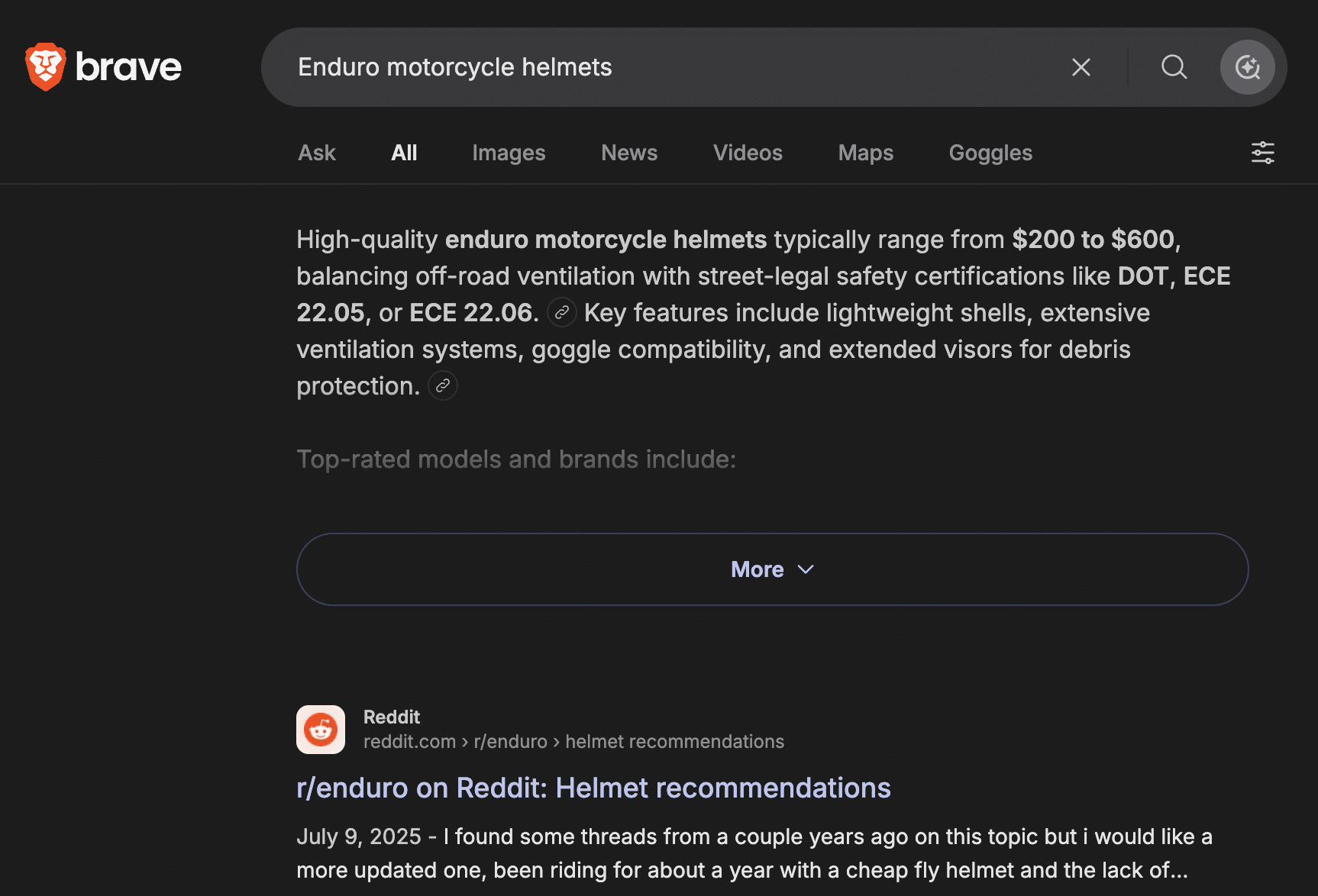
DuckDuckGo is no exception with Search Assist, its automated AI summary feature built into search results.
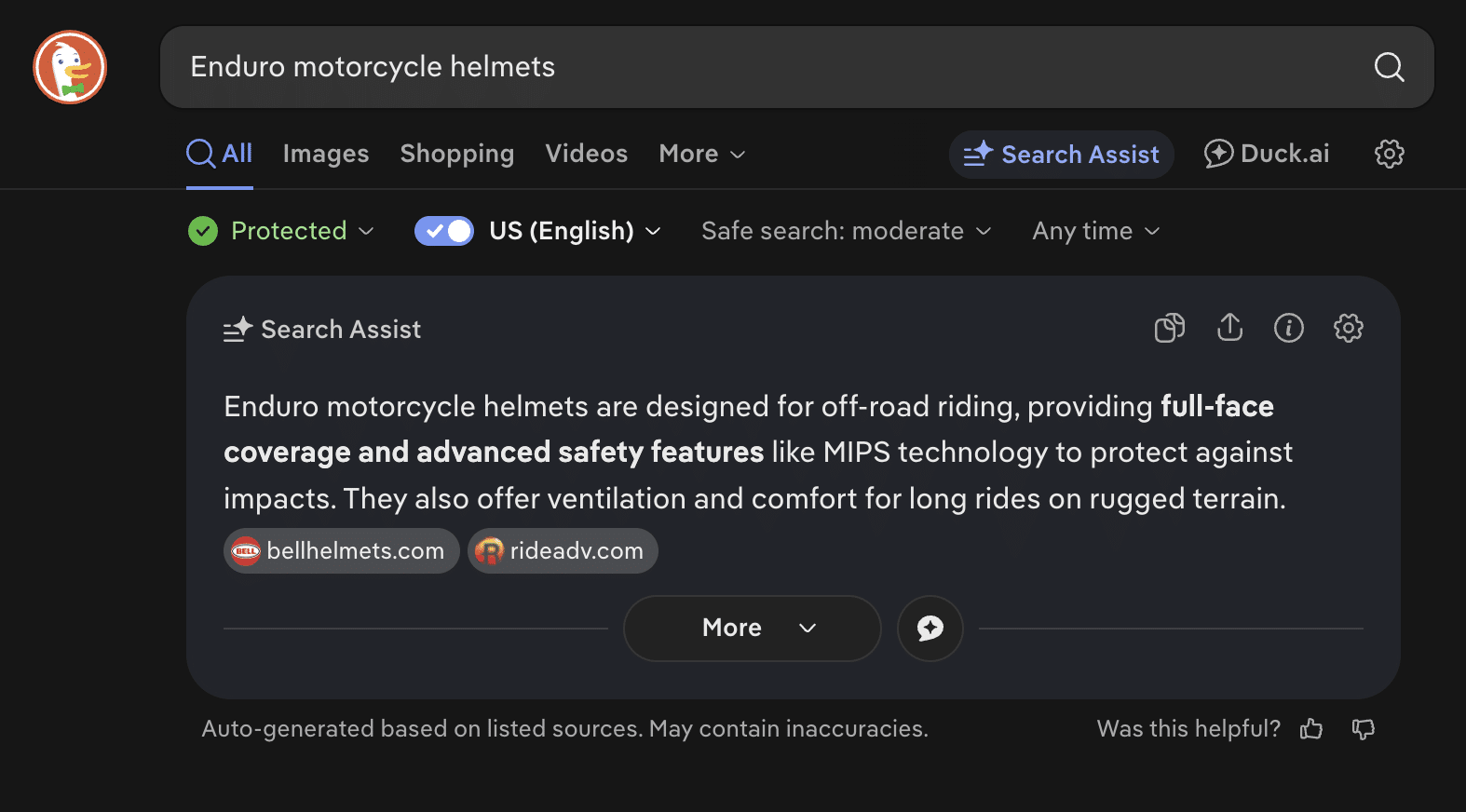
However, AI-generated summaries are only part of the story. Most search engines now let users run multi-step queries and dive deeper into specific topics in an AI chat interface. Examples include Google’s AI Mode, Microsoft Copilot, DuckDuckGo AI Chat, and Brave Search’s Ask AI.
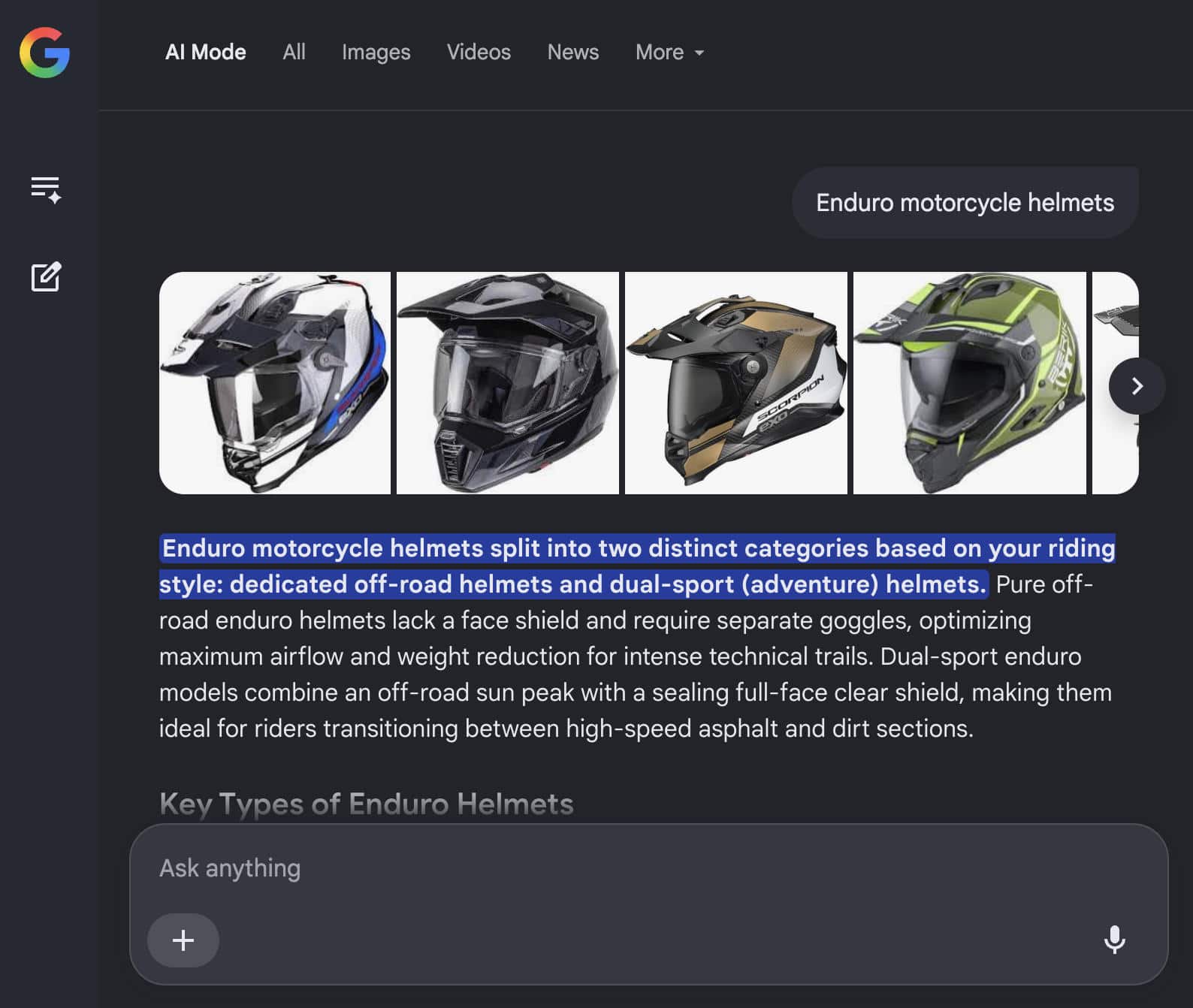
Then there are answer engines, platforms built specifically to “converse” with users by providing AI-generated answers, while linking to some of the sources they use.
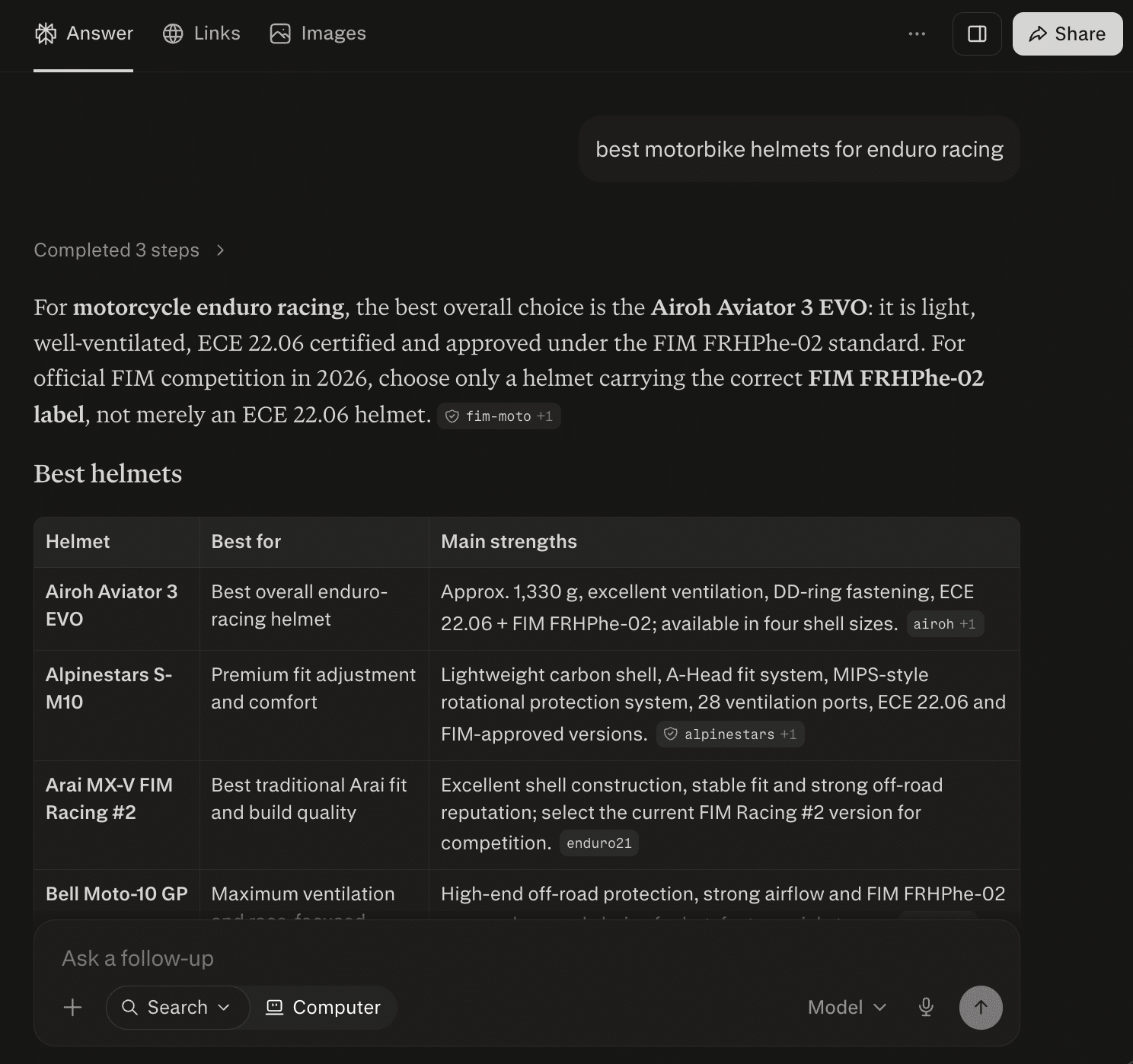
The takeaway is simple: searching online no longer means receiving a list of links and choosing one to visit.
Users can increasingly get the information they need directly from the search experience.
Zero-click searches and shifting user behavior
This shift has contributed to the rise of zero-click search, where users get the information they need without clicking on an external link.
For affiliate publishers, that can mean fewer organic Click-Through Rates (CTR).
According to Datos’ State of Search Q2 2026 report, 25.3% of US desktop searches in June 2026 ended without a click, up from 22.4% in March. In Europe and the UK, zero-click searches increased from 19.6% to 22.9% during the same period.
The same report points out various important changes in search habits:
- Users are adopting long (6–8 words) and ultra-long queries (15+ words).
- Searches for specific websites have dropped sharply across all engines.
- Searches aimed at evaluating products/services before the final decision are rising.
- YouTube is registering a significant surge in search volume, confirming a rising preference for video walkthroughs and tutorials.
- Reddit’s user share is also growing, particularly in Europe, even as searches per user held steady.
Furthermore,
- In both the US and EU/UK, organic clicks to the open web (non-search engine properties) dropped to roughly 40% in June 2026.
- A growing percentage of post-search interactions remain inside Google’s ecosystem (Maps, Weather, Hotels, etc.).
The data points to an undeniable reality for affiliate publishers: the era of easy traffic driven by generic content and simple keyword targeting is over.
Buyer’s journey and sales funnel in affiliate marketing
Users no longer visit affiliate or merchant sites to learn how to solve a problem or find the right product, because AI now answers their questions.
The rise of long search queries (6–15+ words) suggests that users are becoming more specific about what they want. They want to understand real-world use cases and technical nuances before making their purchase decision.
Furthermore, the growing popularity of platforms like Reddit and YouTube shows the value of content from real people. Users are turning to vertical platforms for candid, authentic reviews—ideally backed by video proof showing how a product performs in a specific use case or solves a concrete problem.
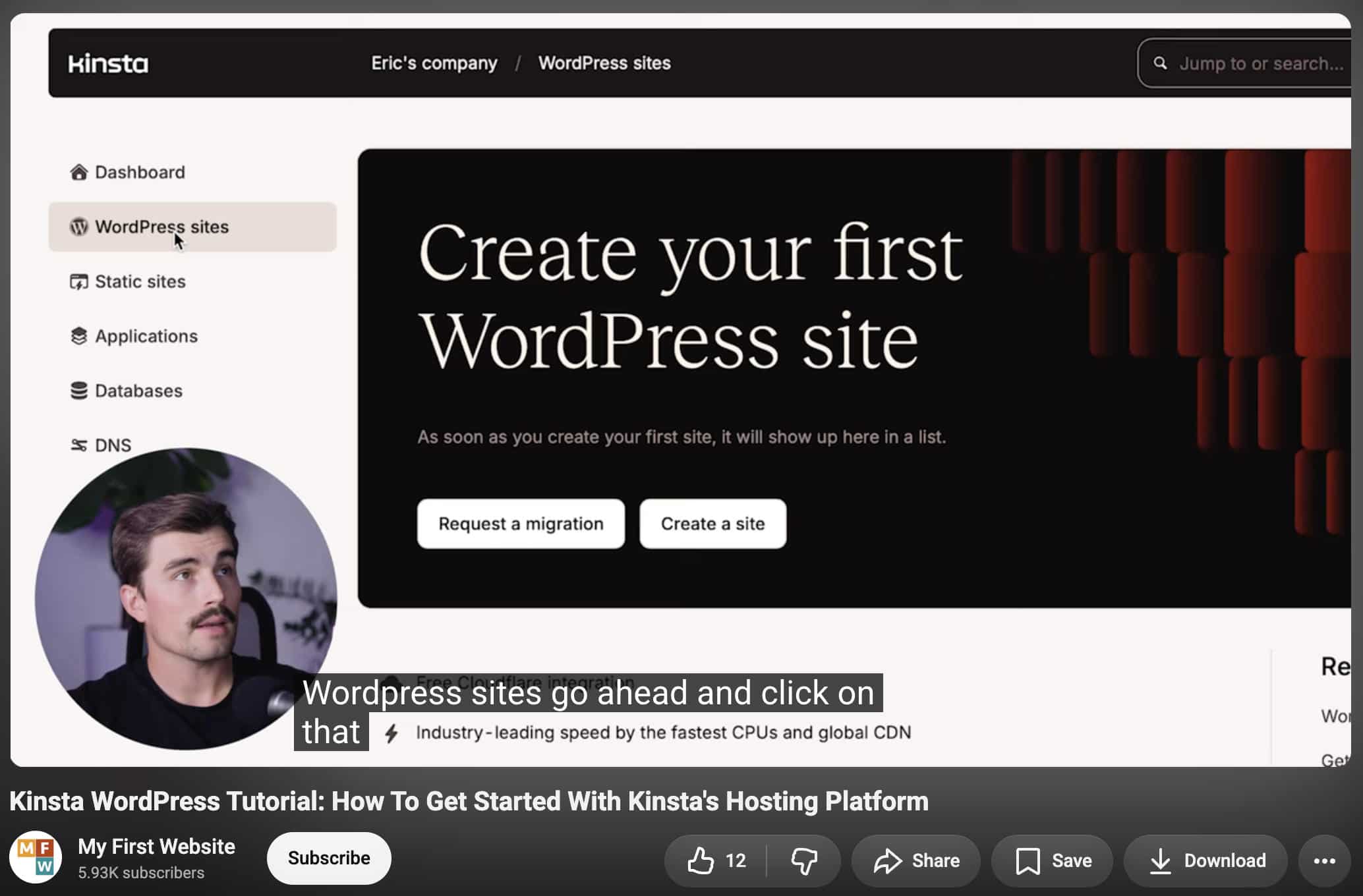
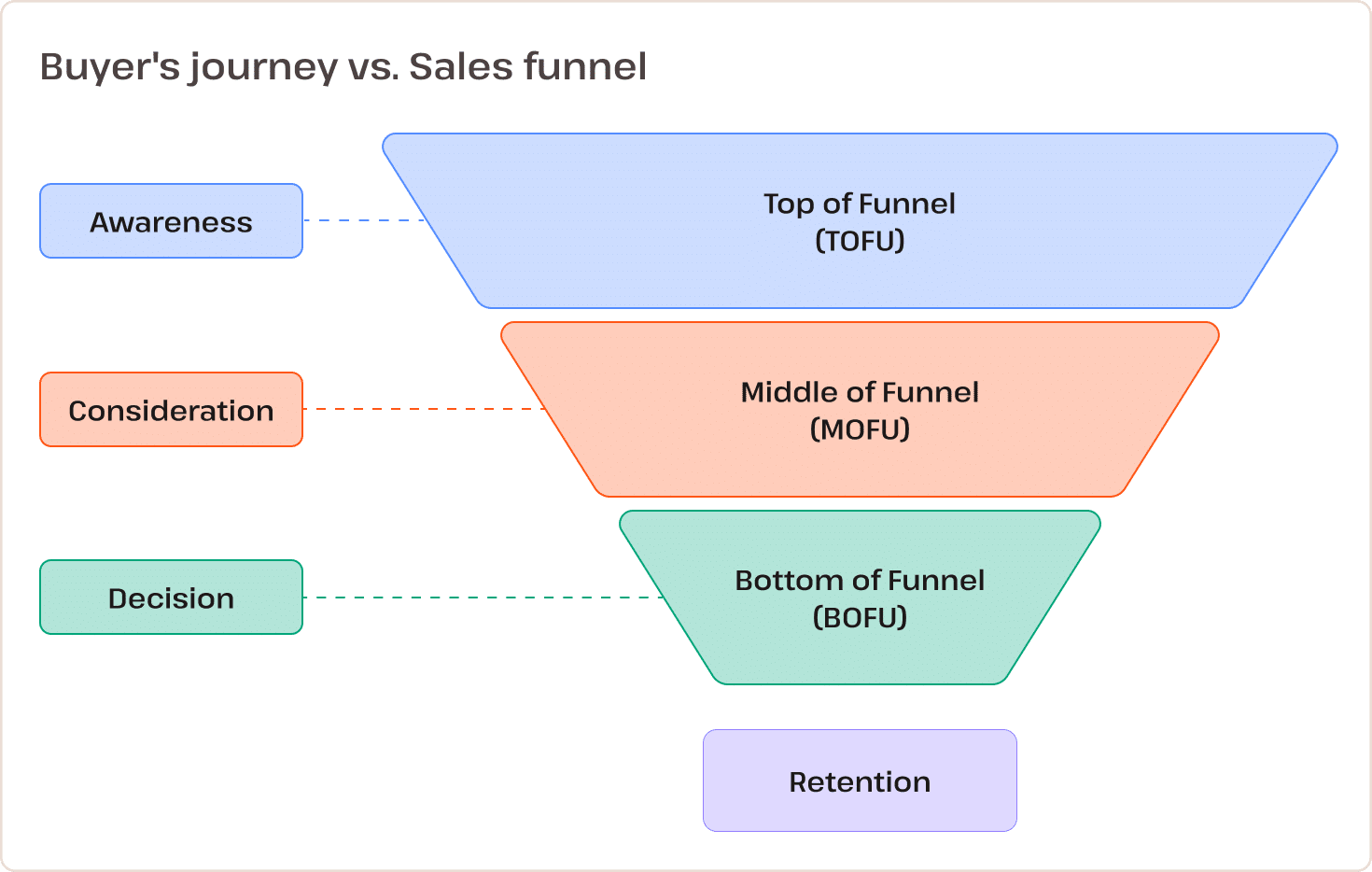
For affiliate publishers, this creates an opportunity to focus more on the middle and the bottom of the funnel, or MoFu and BoFu.
Instead of publishing another generic comparison article like “The 10 Best XXX for YYY”, you can focus on creating content for readers who already understand the basics and need help making a decision.
These might include:
- Product walkthrough
- First-hand testing and benchmarks
- Edge cases
- Stress testing
- Honest evaluations of strengths/weaknesses
Relying on low-cost, generic content creation no longer pays off; it pushes affiliate businesses into marginal, vulnerable market positions.
So, what’s the best strategy to succeed in the AI search era?
7 affiliate marketing strategies in the AI era
These changes bring us to the central question of this article: Is affiliate marketing dead?
The short answer is no. Affiliate marketing isn’t dead, but some traditional affiliate strategies are becoming less effective.
As AI-driven search evolves, publishers that prioritize content volume over quality and depth are particularly vulnerable.
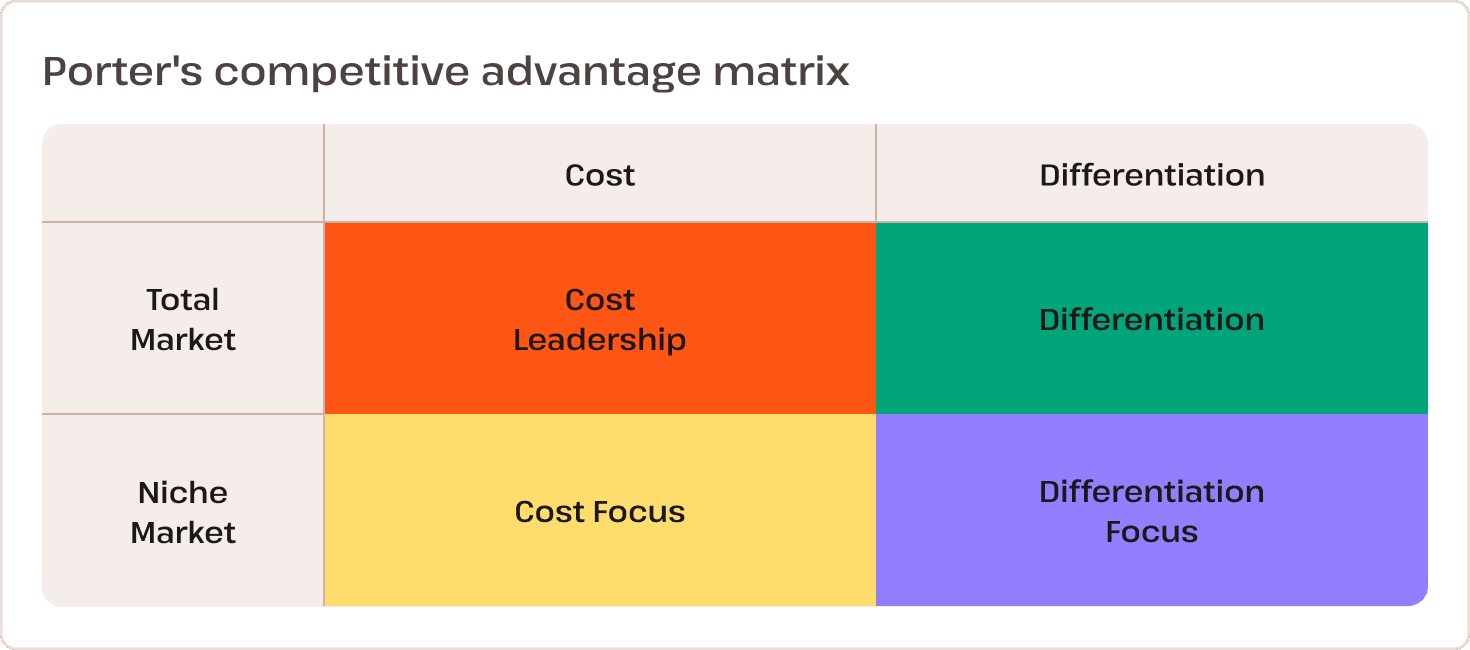
Strategies at the margins of the market
Publishing large volumes of low-cost, generic content makes it difficult to stand out from competitors or provide real value to readers.
In the affiliate industry, the drop in CTR from zero-click searches makes volume-centric, low-cost content strategies less sustainable. Generic content is easy to replicate and fails to provide the hands-on experience and insights the readers seek.
Second-hand or synthetic reviews that simply aggregate product specs and third-party opinions also do not drive clicks because AI can provide the same information directly in search results.
As a consequence, an affiliate strategy aimed exclusively at organic keyword ranking simply no longer works.
Penetration strategies and authority building
Instead, aim for niche leadership through a differentiation strategy: make your brand unique and recognizable, build trust, and deliver real value to your readers.
For affiliate publishers, the main pillars of a differentiation strategy include:
1. Vertical Specialization
You can’t position yourself as an expert on everything.
If you target an entire industry or a broad niche, your content won’t have the quality and depth users demand.
Instead, focus on a specific market niche and aim to become the recognized authority in that space by solving specific problems.
Sam Gooch, Head of Performance Marketing at Kinsta, explains why Kinsta has taken a similar approach:
We’ve narrowed our positioning, consolidated our topical focus, and reduced content that diluted our authority. We’ve found it’s better to focus on fewer topics and do them really well than trying to cover everything.
Whether you’re optimizing for search engines or AI assistants, depth and authority now matter more than breadth.
Create content that is genuinely helpful, reliable, and people-first, as recommended by Google, by targeting precise micro-personas and real-world edge cases.
For example, instead of writing a generic article like “Best WordPress hosting,” focus on an edge case such as “How to prepare for Black Friday: The best hosting infrastructure for high-traffic WooCommerce stores.”
AI is good at summarizing general information, but it falls short when it comes to digging into complex edge cases—such as a high-traffic e-commerce store preparing for a traffic surge.
By positioning yourself as an infrastructure expert for demanding websites, you attract a high-intent audience that is searching for reasoned solutions and in-depth analysis of complex issues, not general overviews and quick summaries.
2. First-hand evidence
Move beyond feature lists and generic descriptions. Provide real usage proof, first-hand field data, proprietary benchmarks, and rich media assets.
Develop a standard testing framework or methodology (e.g., “10 tests a host must pass to be featured on XXX”) and evaluate providers or products based on your own proprietary benchmarks. Beyond giving you a unique, recognizable positioning in your niche, this also increases your visibility across AI engines.
Take it a step further by publishing the raw test data you have collected as Open Data or in a public Google Sheet. This increases your chances of being cited as a primary source, because AI models favor structured data.
Kinsta’s affiliate partners know this well.
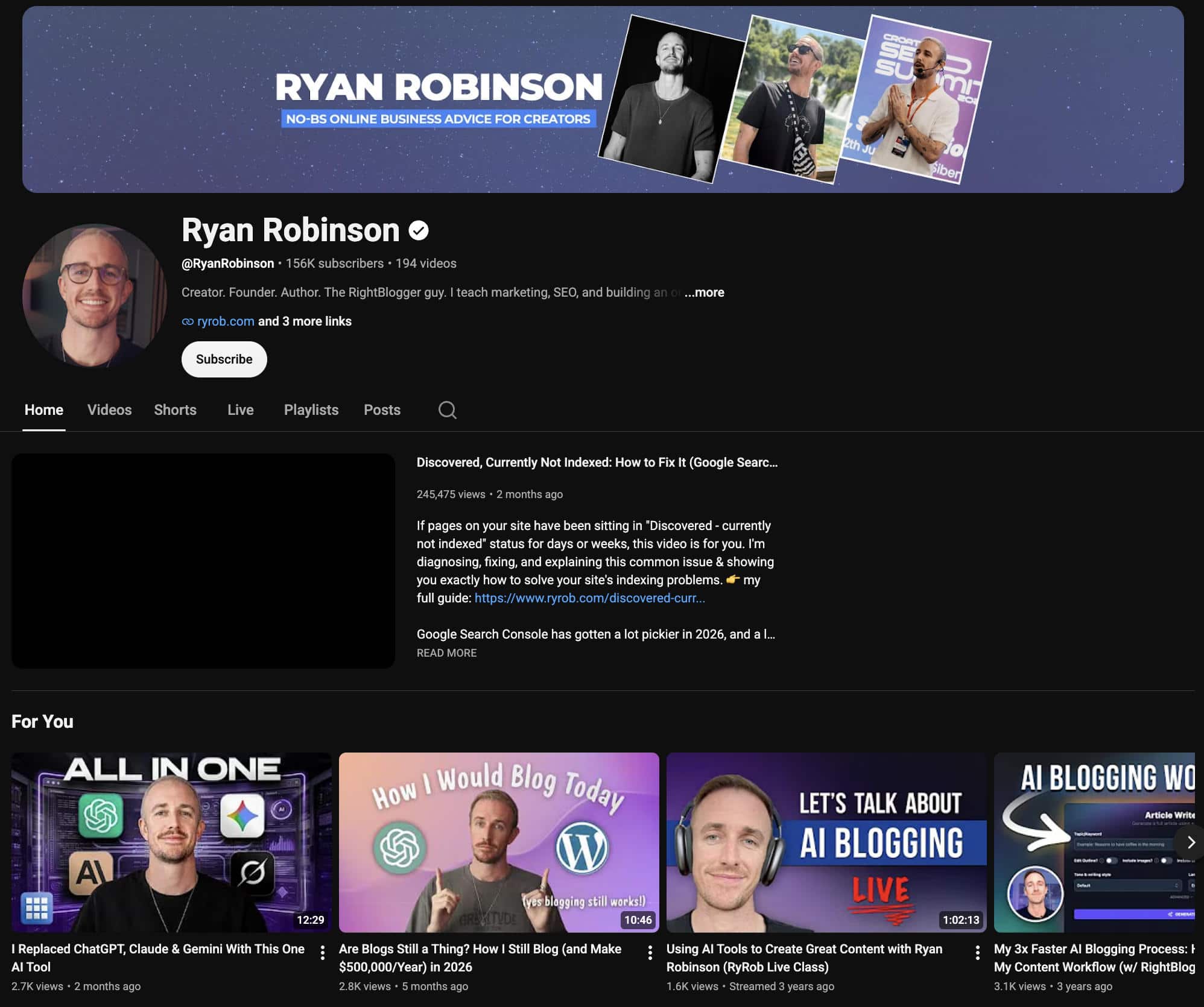
Ryan Robinson at RyRob.com suggests publishing proof, not summaries:
The single biggest differentiator right now is first-hand data. Real screenshots, your own performance numbers, before-and-after results, a teardown of the actual dashboard, running surveys & polls of your audience. On my hosting reviews, I run my own speed tests and show the receipts, because “here’s what I measured” beats “here’s what the vendor claims” every time. Audience members and models want original data, so if you can show something no one else can show (in your own way), you’ve built a moat AI can’t cross.
Here is what Anil Agarwal at Blogger Passion has to say about it:
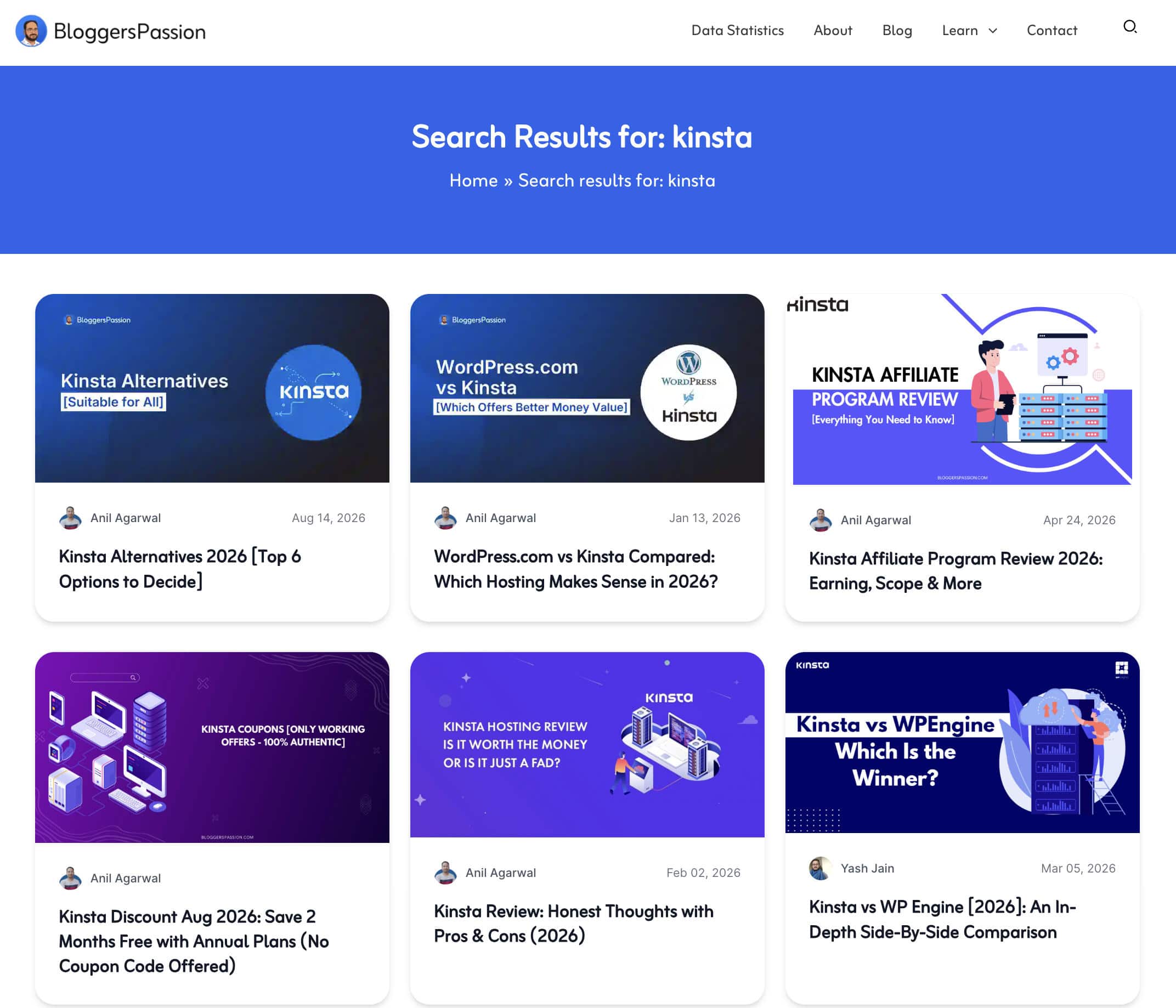
Whatever content we publish now includes REAL author experience, with lots of screenshots. AI can’t replace authority.
3. High-trust formats for MOFU and BOFU
Generic content no longer drives sales. Basic comparison tables offer information any AI assistant can readily provide.
As AI increasingly handles TOFU searches, focus on high-trust content for the later stages of the funnel (MOFU and BOFU). This includes in-depth reviews grounded in real-world experience, objective head-to-head comparisons, edge-case analysis, hidden-flaw evaluations, and detailed setup or configuration tutorials.
Sam Gooch, Head of Performance Marketing at Kinsta, explains how Kinsta has adapted its content strategy:
We’ve shifted much more of our focus towards bottom-of-funnel content for people actively comparing hosting providers or looking to migrate, with more time spent improving commercial pages, comparison content and migration-related content than publishing generic educational articles.
He adds:
For affiliates, the same principle applies: one comparison page that converts is worth far more than dozens of informational articles that no longer attract meaningful traffic.
Be balanced and transparent when detailing pros, and don’t skip listing and describing the cons of the products or services you promote. You can expand your content with sections like “Who this product is NOT for” or “5 reasons not to sign up for this service.” This eliminates the perception of bias usually associated with affiliate content and positions you as an impartial expert.
In head-to-head comparisons, provide a comprehensive overview of your industry’s landscape by including non-affiliated products and services, and help readers choose the best solution for their specific needs by replacing traditional comparison tables with a decision matrix.
Your readers will recognize that your goal is not simply to make money from recommendations. You’re helping them make a better purchasing decision while building long-lasting trust in your brand.
According to Ryan Robinson:
The informational, top-of-funnel content that just restates facts is exactly what an AI Overview answers on the results page.
[…] As an affiliate, the fastest way to become irreplaceable is to stop being an aggregator of information and start being an operator + teacher in the real world. Practically, that means buying the product, running it, breaking it, and documenting what actually happened. AI can synthesize a spec sheet in seconds. It can’t fake the six hours you spent showing & telling what’s possible with the tool. Video is a great format to showcase this in, and YouTube is the #1 platform for continuing to grow my affiliate income today.
4. Structured data and human storytelling
Modern content must serve a dual purpose: giving machines the data they need in the most accessible format while building compelling human narratives.
Use structured data (Schema Markup, clear tables, FAQs, semantic HTML) to ensure your content is easily read, understood, and cited by AI agents.
Also, make your content even more accessible to LLMs by adopting emerging Generative Engine Optimization (GEO) best practices:
- Structure the key data of your article explicitly by placing clear summary tables or TL;DR sections at the top of your content. This makes it easy for LLMs to extract your data and use it in their answers.
- Use precise technical jargon and link to core entities within your industry. This helps LLMs naturally connect your content to other high-authority sources.
- Leverage machine-readable standards, such as Schema.org markup (JSON-LD), to detail the features of the products or services you promote, as well as reviews and FAQs. This makes it easier for AI agents to crawl and parse your site.
At the same time, weave in authentic human narratives to genuinely engage readers—building a sense of real-world connection that guides them to solve their problem with the right product.
This has an important consequence: with fewer visits in the TOFU stage from AI referrals, your affiliate site will most likely get fewer clicks, but if you optimize for AI, it will also have a better conversion rate.
Matthew Woodward, CEO at Search Logistics, has great advice here:
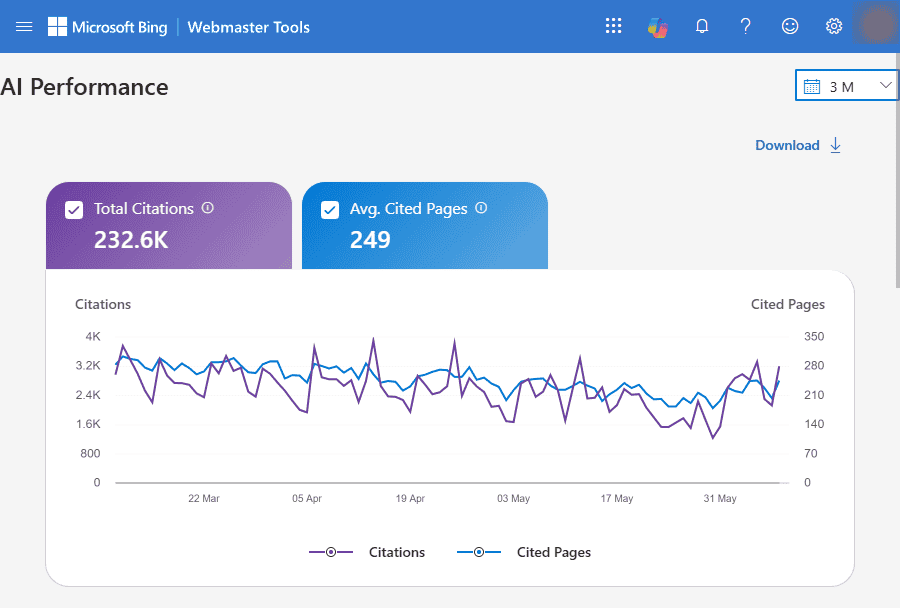
Most people don’t know which pages are already being cited by AI or why some pages are cited while others aren’t. You wouldn’t perform SEO without Search Console, so why are you approaching AI SEO without citation data?
Bing Webmaster Tools launched a free AI Performance report that tells you WHICH SPECIFIC pages Copilot is citing on your site AND what “grounding queries” it used to find your content. These grounding queries are the exact queries AI runs against the index before it writes any answers.
5. Multi-channel strategy and ecosystem diversification
Stop being a mere transactional intermediary between the customer and the merchant by adopting a multi-channel strategy (newsletters, dedicated video, niche communities). Establish yourself as an authoritative, recognizable editorial brand by adding value at every touchpoint of the buyer’s journey.
Build a solid email list and launch your own newsletter. An effective email marketing strategy allows you to step outside the traditional search-centered funnel and reach your subscribers directly with curated content. You can convert visitors into subscribers by offering free tools, templates, or downloadable PDFs.
Once you have built a strong subscriber list, you can deliver your product recommendations directly within an email nurture sequence—safely isolated from search engine algorithms and yielding conversion rates that can significantly outperform traditional SEO channels.
Invest in video content creation for YouTube. The video format is more engaging and immersive than a lengthy descriptive article, and it provides a more trustworthy demonstration of a product’s or service’s true quality.
Establish and actively manage micro-communities on platforms like Reddit or X, as well as unfiltered niche spaces on Discord or Telegram. The strong social proof in these environments usually leads to higher conversion rates than traditional channels.
Kinsta affiliate Ryan Robinson has invested heavily in channel diversification and building an email list:
The affiliates I know who are panicking the most are the ones who were 90% dependent on Google organic traffic. Diversify into channels you own. My email list is the asset I’d protect above almost anything else, because it’s the one audience relationship no algorithm update can take from me. Build the list aggressively, add a YouTube presence, and treat every piece of content as a way to convert a visitor into a subscriber, not just a pageview to be counted.
With a multi-channel strategy, you stop relying on a search algorithm and start building genuine trust and brand recognition. Your reputation becomes your primary asset, and visitors will actively seek you out—independently of their interactions with search engines or AI assistants.
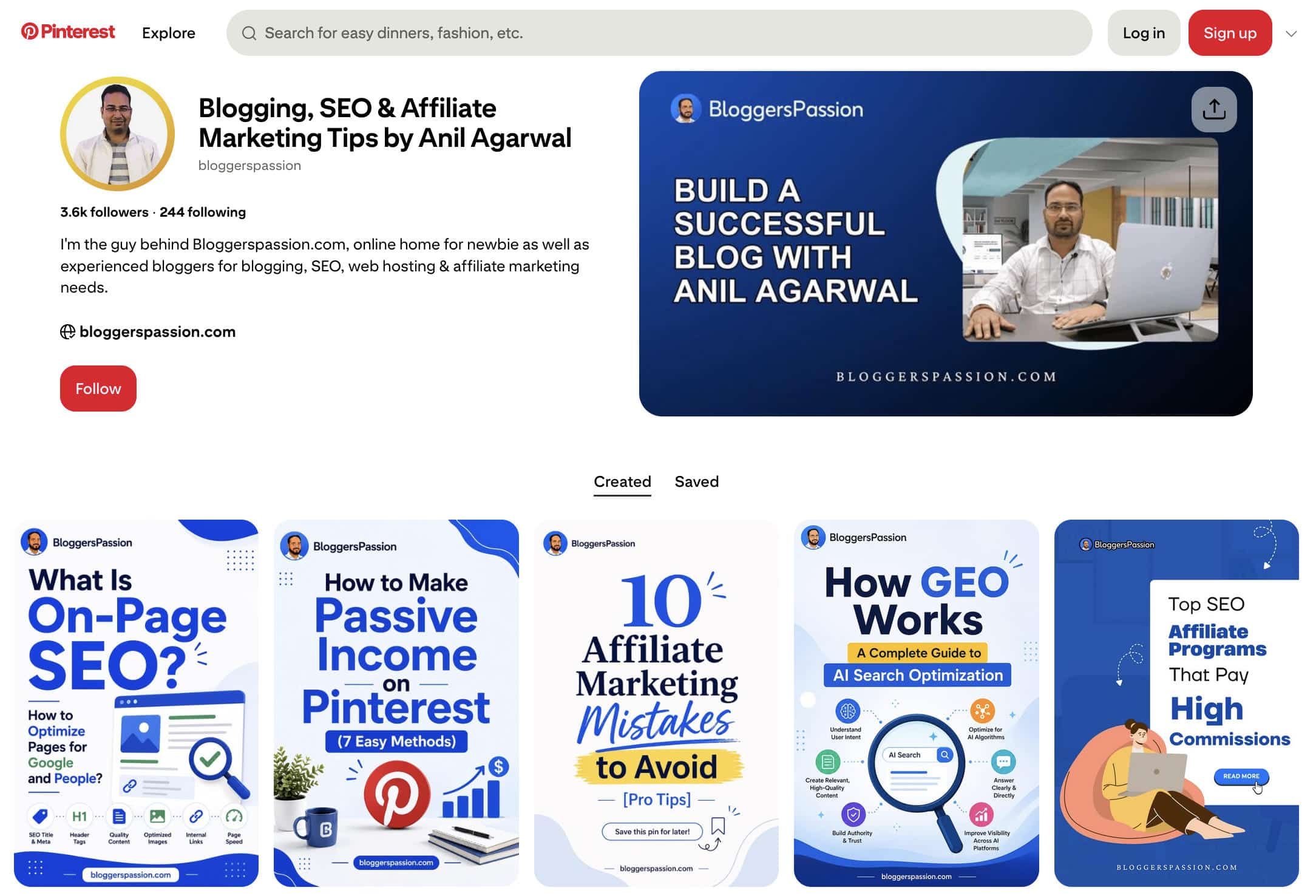
Anil Agarwal is another affiliate who invested in a multi-channel strategy:
If you rely only on Google, you won’t get any traffic or leads (for most websites). You should think beyond Google, and we’re currently diversifying our traffic sources by creating regular content on platforms like LinkedIn, YouTube, and Pinterest.
6. Leveraging AI visibility and optimization tools
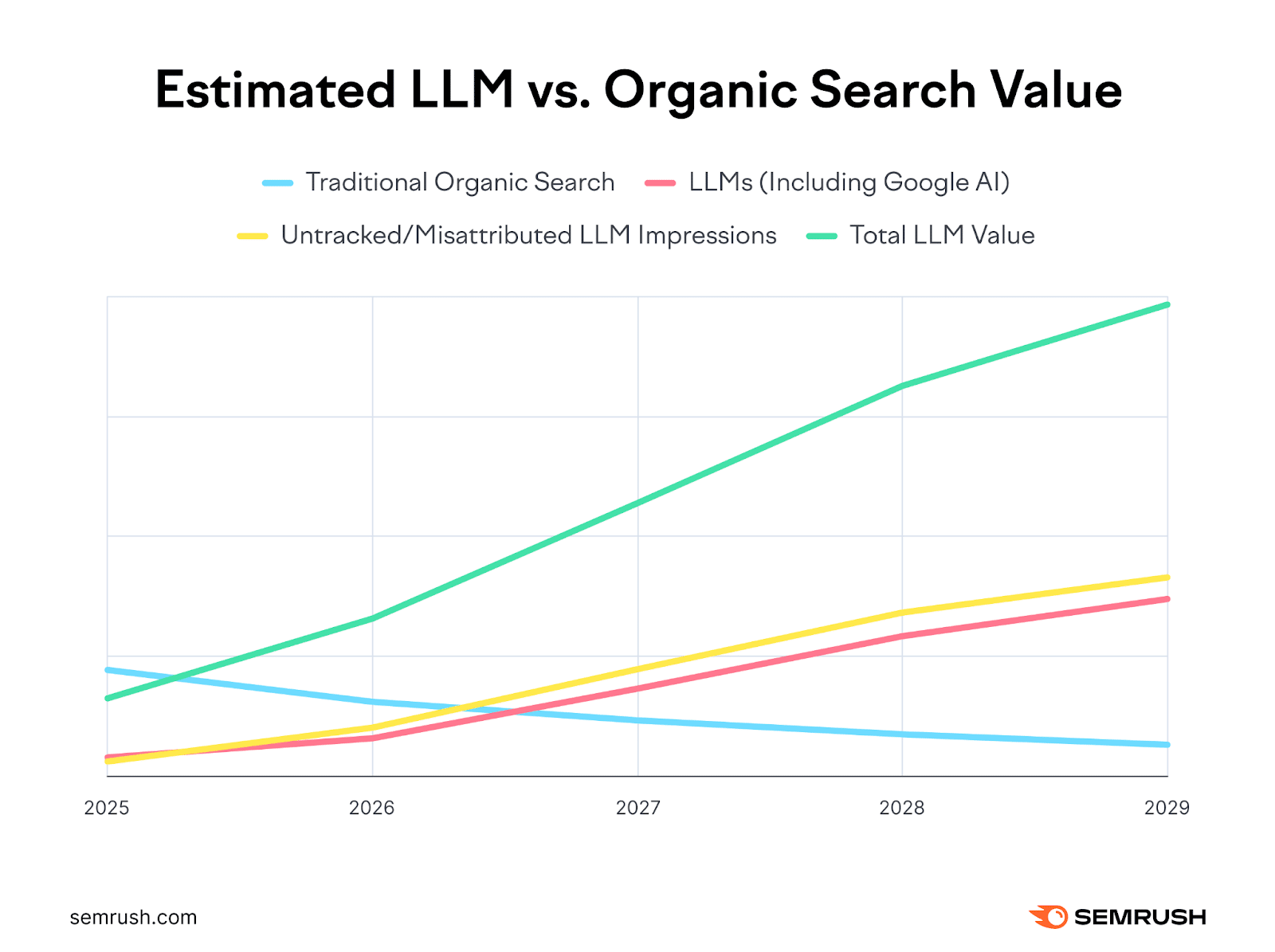
According to a study by Semrush, the average visitor coming from LLMs is worth 4.4 times more than an average visitor from organic search. This confirms and quantifies what we noted about the sales funnel: fewer TOFU visits, more MOFU and BOFU traffic, and readers with a specific search intent and a clearer decision to buy.
Visitors coming from LLMs tend to convert better because the AI has already provided the basic information they need (TOFU stage). They have more qualified search intent and are more likely to make a purchase decision. As a result, even a small traffic variation can significantly affect your revenue.
This creates a need to measure brand visibility in AI-generated responses by identifying cited sources and the queries that trigger your content.
Use tools such as Ahrefs’ Brand Radar, Adobe Brand Visibility, or the Semrush AI Visibility Toolkit to monitor how AI discovers, describes, and positions your brand across AI-generated answers.
Bing Webmaster Tools provides a free AI Performance tool you can leverage to track the grounding queries associated with your content.
Matthew Woodward clarifies this concept well, highlighting the importance of optimizing based on data:
Prepare for lower traffic and much higher conversion. […] You will never match the amount of traffic you get from traditional SEO. Affiliates that come out on top will not be the ones with the biggest budgets. They will be the ones optimizing based on data.
7. Set up an AI-assisted workflow
Artificial intelligence is reshaping the search landscape and user habits; it also offers a powerful suite of tools to automate tedious tasks, improve content quality, and boost publishing productivity.
The way you use AI tools makes all the difference. Generic prompts like “write a review of product X” produce generic results that won’t drive traffic from search engines or AI answer engines.
Integrating AI into your workflow doesn’t mean delegating complex reasoning to machines. Instead, it means using AI tools to achieve more through a Human-in-the-Loop (HITL) workflow.
In content production, following the best practices of prompt engineering enables you to scale output and maintain technical rigor without sacrificing the authentic human perspective that ultimately drives conversions:
- Clearly define the AI persona, primary goals, target audience, editorial guidelines, evidence requirements, and negative constraints in a well-structured system instructions section.
- Feed the model raw test results and field measurements to ensure the AI generates content based on your original data rather than hallucinating or scraping generic web filler.
- Instruct the AI to automate structured data production, including semantic tags, Schema.org (JSON-LD) code, comparison tables, FAQ sections, or native WordPress Gutenberg blocks.
The value of trust
In a world dominated by the synthetic, trust becomes the primary asset for business success. Search engines and AI assistants won’t direct readers to your site unless they have a specific intent and are looking for something far more complex than a generic list or feature.
These users are searching for “someone” they can actually trust—someone who offers the security of honest, expert advice, first-hand proof, and real-world data collected in the field.
In the AI era, trust is your ultimate success factor; transparency, authenticity, and authority are your primary levers.
Aleyda Solis is an SEO & AI Search Consultant who knows exactly how to build trust with an audience:
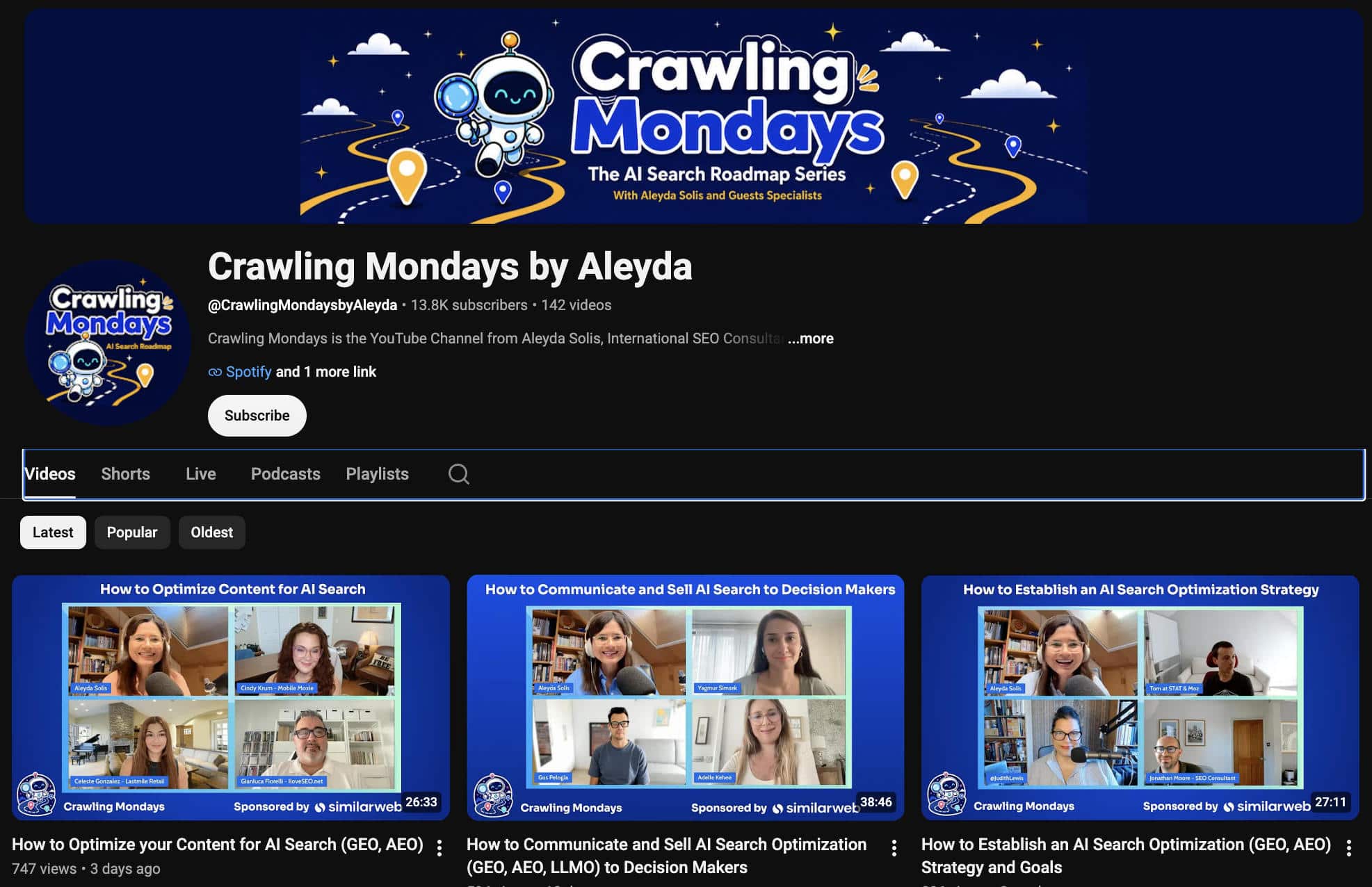
The affiliate sites continuing to grow for non-branded queries despite the rise of AI Overviews share a common pattern: they’re not relying on shallow informational content that can be easily summarized. They’re winning where users still need help making a confident purchase decision.
Their strongest pages are detailed buying guides, comparisons, and individual product reviews supported by first-hand testing, original images, videos, measurements, scoring systems, and clear explanations of the trade-offs involved. This is the type of information an AI summary might reference, but cannot fully replace.
Anil Agarwal agrees:
I think real-world case studies are performing well. When we publish our blog income reports, the mistakes we made, and the lessons we learned, it builds trust with our audience. Also, AI can’t easily copy that.
Transparency
Today’s consumers are smart and skeptical. They instantly spot shallow or superficial content masquerading as objective reviews, where the publisher’s sole interest in driving a conversion is obvious.
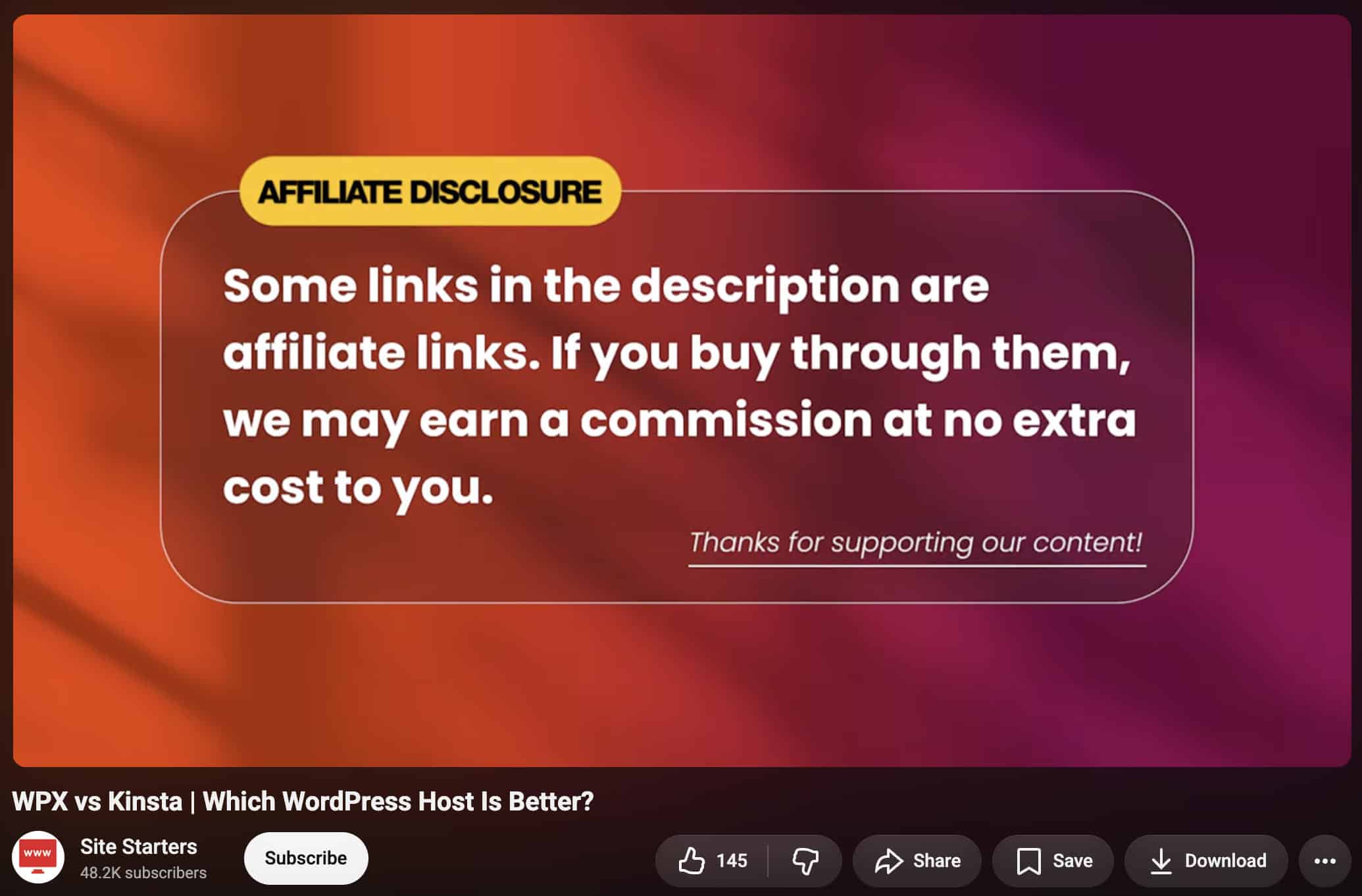
If you want to earn your readers’ trust, state openly that your content contains affiliate links—but back it up by demonstrating a rock-solid editorial policy. Explain how products are tested and give clear proof that your evaluation is never dictated by the commission you receive from the merchant.
Be equally transparent about the flaws of the products you promote. Openly stating which use cases a product is ill-suited for—or pointing out drawbacks that might discourage a purchase—ensures that readers actually believe you when you highlight its strengths or the specific scenarios where it shines.
Authenticity
Give your audience concrete proof that you have actually tested the product or service. LLMs cannot replicate this. Watching a real person unbox, configure, and use a product proves competence and reliability.
The value of a video demonstration skyrockets when you are recommending expensive or complex products that require not just an expense, but a cognitive and emotional investment as well. Buying a complex product means learning how to use it. An expensive product, on the other hand, demands financial justification supported by hard proof of its actual functionality and real-world utility.
When you create content, add screenshots of actual dashboards and/or photos you took yourself, run and include custom benchmarks, and record and embed unscripted video walkthroughs. All of this helps you build authentic human narratives your reader will appreciate.
Authority
No algorithm can magically turn you into an authority in your field. Authority is built over time by consistently delivering accurate, highly competent content.
Readers—especially expert buyers with strong search and purchase intent—instantly spot generic content assembled by scraping data from manufacturer websites.
To build authority, your content should highlight subtle flaws, show practical validity, and use technical jargon appropriately. Give your readers the feeling that you are one of them—an industry peer they can learn from and truly rely on.
Your AI-ready affiliate checklist
This is a wrap-up and final AI-ready affiliate checklist to help you evaluate your publishing strategy before going live.
Check your content by answering the following questions. If your strategy meets the requirements outlined in this article, you are well on your way to building a solid affiliate business that isn’t just resilient to AI, but leverages new technologies and evolving search habits to succeed.
1. Is your content targeting MOFU and BOFU stages?
Create in-depth guides, detailed tutorials, and edge-case analyses that capture deep-funnel intent instead of introductory, generic content meant for a preliminary funnel stage.
Remember that AI engines fully satisfy generic search intent. Don’t waste time and resources on lengthy introductions, simple feature lists, or superficial comparisons that are easy to replicate. Instead, invest time and resources in creating content that targets an already informed audience in the deeper stages of the funnel.
2. Are you including concrete proof in your content?
First-hand evidence, field-tested data, and custom measurements should take center stage in your publications.
AI engines favor content that is unique and unreplicable. By adding first-hand proof and personally collected field data, you create real value for your readers while giving AI engines a strong incentive to cite and link to your content in their answers.
3. Are you implementing Generative Engine Optimization (GEO) strategies?
GEO is something you must consider in your affiliate strategies. Incorporate clean Schema.org markup (JSON-LD) into your text and structure your pages using semantic tags that AI assistants can easily parse. Additionally, include structured comparison matrices, TL;DR summary tables, and dedicated FAQ sections.
4. Are you diversifying your online presence beyond Google?
Move beyond SEO-focused organic search by building an email list, publishing video demonstrations on YouTube, and nurturing direct relationships in vertical communities like Reddit, Discord, or Telegram. This allows you to reach your audience directly in the environments they prefer most.
5. Are you tracking AI visibility and grounding queries?
It’s no time to rely on guesswork: make data-driven decisions. Monitor how answer engines discover, describe, and position your brand by leveraging AI visibility tools and search engine AI features.
6. Have you adopted a Human-in-the-Loop AI workflow?
Build structured prompts using prompt-engineering best practices. Invest time in defining well-structured system instructions, feeding the model raw test results and field measurements, and instructing the AI to generate structured data, semantic tags, and Schema.org (JSON-LD) code.
7. Are you building trust through transparency, authenticity, and authority?
Disclose affiliate links, explain your testing methodology, and be honest by openly discussing product flaws and scenarios where the product is not the right fit for your readers.
Final words
That’s not all, though. We have one final piece of strategic advice: Recommend only the best products in your niche.
Do not prioritize products based solely on commission payouts, as this can severely damage your reputation as an expert and cost you your readers’ trust.
If your niche is managed hosting, check out the Kinsta affiliate program. It is the most rewarding affiliate program in the industry and gives you the peace of mind of recommending a top-tier service to your audience—rated the #1 managed hosting provider in the world by 1,600+ users on G2.