 Add as a preferred source on Google

Have you ever wondered how to check what version of WordPress you or another site are using? There are quite a few ways to do it!
It’s easiest to find your WordPress version if you have access to your admin login or site files, but there are workarounds even if you don’t.
If you need to know what version of WordPress you’re using so you can upgrade, troubleshoot a problem, or are just curious about what WordPress version someone else is using, try one of these easy methods.
It often only takes a few minutes and minimal work to locate this crucial info!
Why Check What Version of WordPress You’re Using?
You might be wondering why you should bother keeping an eye on your WordPress version. Why worry about something small like that?
It’s important to make sure your site is up to date at all times. A large share of hacked WordPress websites are found to be running an outdated version of the CMS. Hackers often rely on exploits to infiltrate websites — vulnerabilities that are usually quickly patched, and only work if you fail to update your website. Keeping WordPress updated is your best defense against hacks.
There are also incompatibilities to worry about. Some plugins won’t work with the latest release of WordPress, while others will break if your version is too old. As WordPress updates, they add and remove features and functions that plugins may rely on.
When installing a plugin, you’ll need to check what core version your site is running on to make sure everything will work smoothly.
If something goes wrong on your site and it ends up not loading, displays a strange error, or throws the white screen of death, diagnosing the error may require knowing what version you were running — something you likely don’t know off the top of your head.
Lastly, there may be cases when you want to find what WordPress version someone else is running. For instance, if you’re working with a client, you may want to see if their site is out of date so you can help them fix this security issue right away.
These problems are less pressing now that WordPress auto-updates, but if you haven’t checked in a long time, it’s a good idea to do so.
1. Method: Check the Admin Area
If you’re able to log in to your website’s backend, this is probably the easiest and most accurate method for determining what version of WordPress you’re running.
There are several areas in the admin dashboard that display the currently installed version, or will tell you if your site is out of date.
Step 1. Lower Right Corner
Whenever you’re logged into WordPress, you can find the version number on any page of the backend. Just look at the bottom right corner and you should see it there. If you don’t, try going to the dashboard homepage.
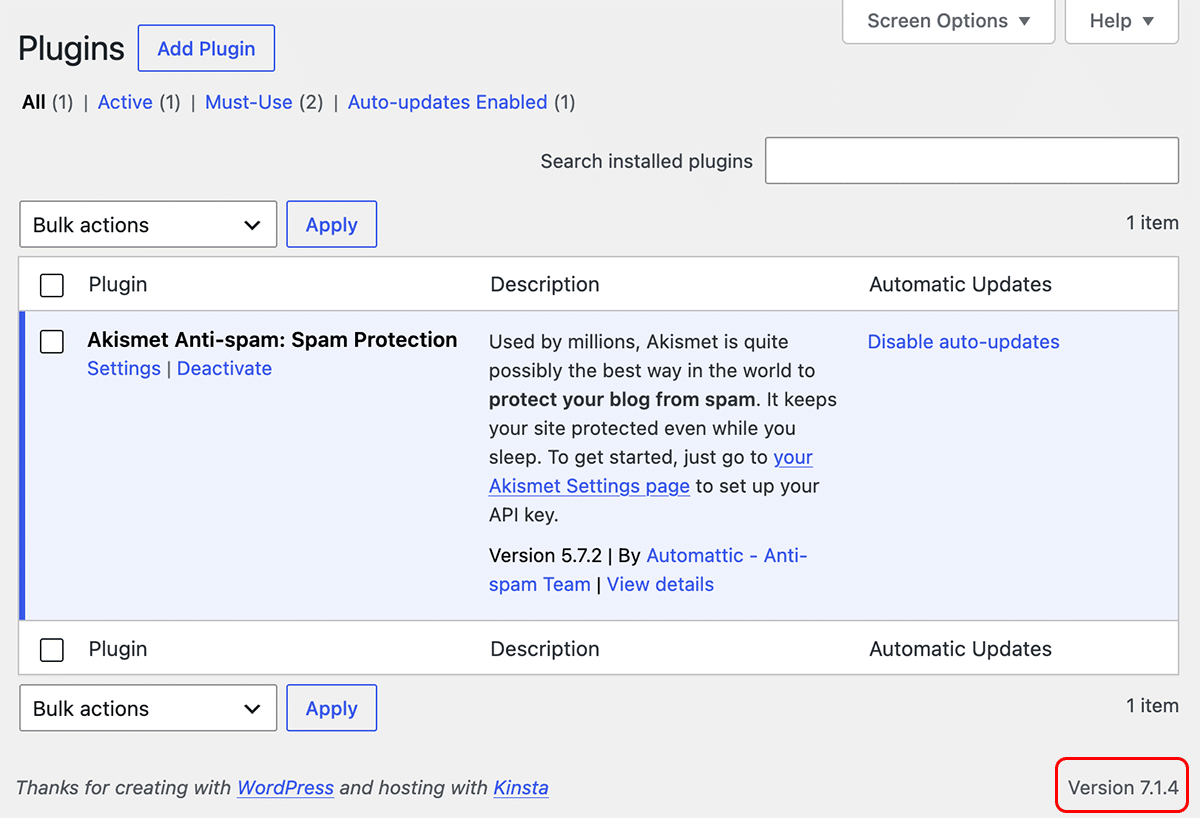
In case you can’t find it, there are ample other places to check what version of WordPress you’re running.
Step 2. “At a Glance” Box
As soon as you log in, you should be taken to the Home page on the Admin dashboard, where you’ll find the “At a Glance” box that shows information like posts, pages, comments, the currently installed theme, and the WordPress version:
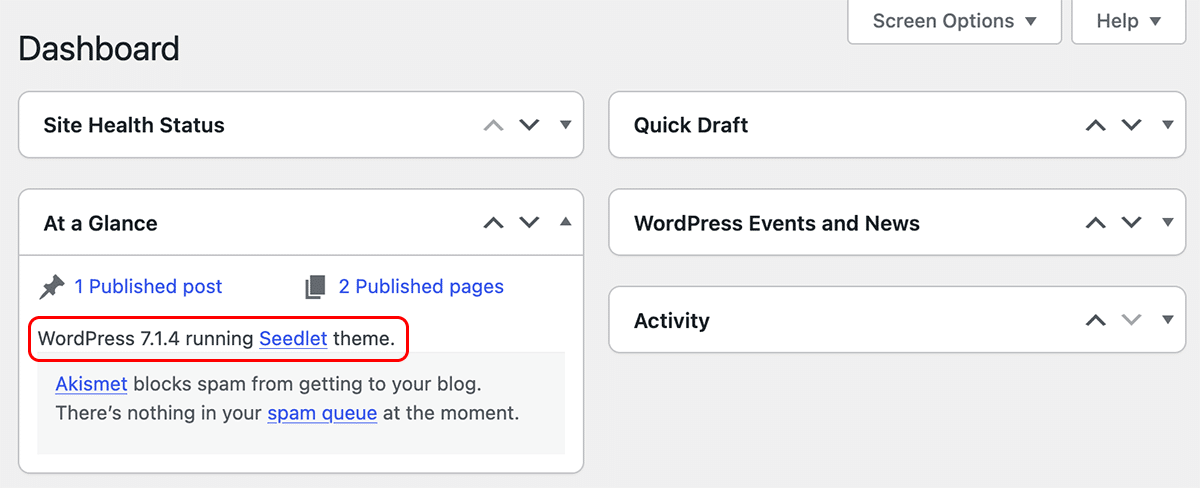
If you don’t have the “At a Glance” box, you may have removed it (or downloaded a plugin that removes it), installed a custom admin theme, or are using a very old version of WordPress.
Step 3. “Updates” Screen
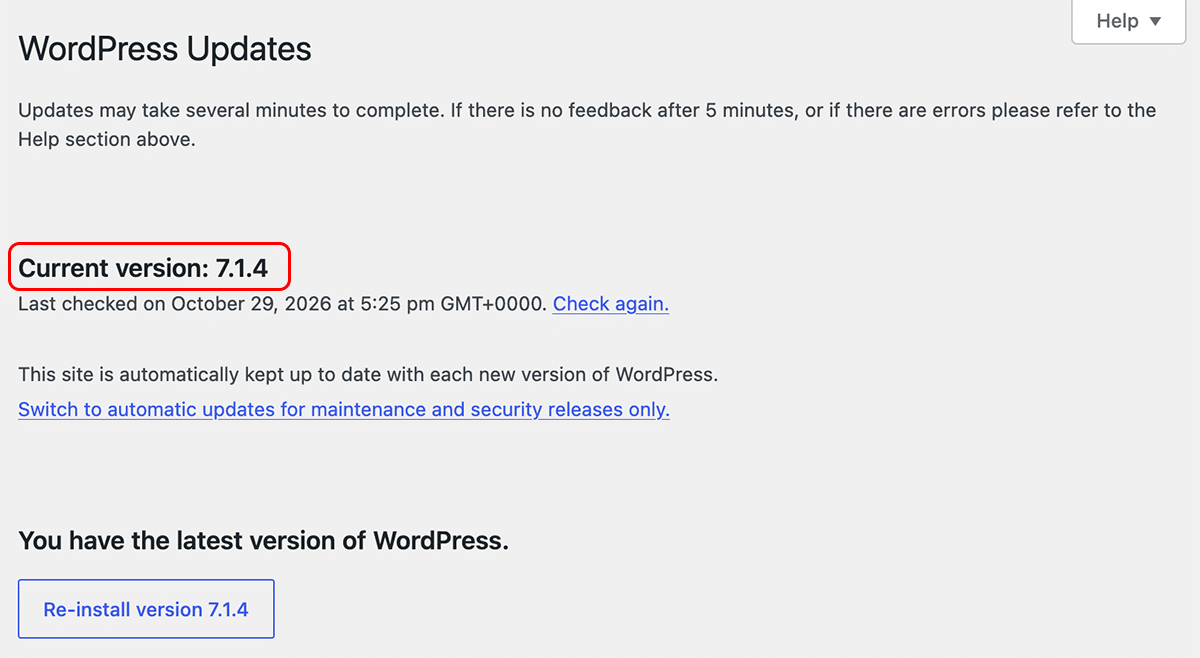
You can also head to Dashboard > Updates, which will prompt you to update if you’re running an older version or inform you that you already installed the most recent version of WordPress.
The downside here is that, if you do have an outdated version installed, it won’t give you the version number. It only prompts you to update.
Step 4. “About WordPress” Screen
Last, there’s the “About WordPress” screen you can find by hovering the WordPress logo in the top left corner and clicking the first dropdown option. Even if you’re not updated to the most recent version of WordPress, you’ll see the version number displayed prominently at the top as well as information about that update.
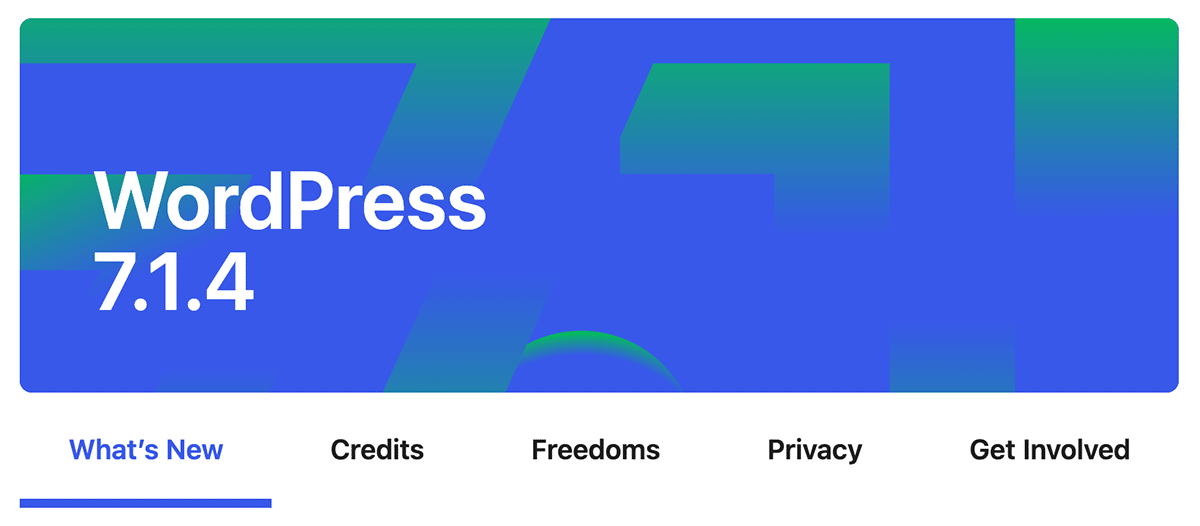
That’s all the ways to find the WordPress version number in the dashboard, but it’s also worth noting that you’ll see a nag at the top of every backend screen prompting you to update to the newest version if you haven’t done so.
If all you’re worried about is staying up to date, look for that message, or go to Dashboard > Updates to check for new versions.
2. Method: Through Your Website’s Frontend
What if you can’t log into your admin area and need to get the version information for troubleshooting, or you want to know what another WordPress website is running on? Within a site’s source code and on certain hidden pages, you may be able to find the version number.
Note that many webmasters take steps to make this information private, so this won’t work on all sites, only on those that have left the default settings intact. If you’ve already taken security measures to protect yourself, you might have to try a different method.
Step 1. Page Source
The first step is to go to any page on the site you’re checking (but it’s best to just use the homepage), then right-click and tap “View page source” or “View Source” in your browser. It will open a new tab showing the page’s HTML and CSS. Press CTRL+F (or CMD+F on a Mac) to bring up the search feature.
From here you have a couple options. Often, you can find the generator tag which will explicitly tell you what version of WordPress the site is running, but some newer themes might disable this.

Alternatively, you can search for links to core assets (CSS and JavaScript) that have the WordPress version appended as part of a ?ver= query string. The most likely candidate for this is wp-emoji-release.min.js.

Step 2. RSS Feed
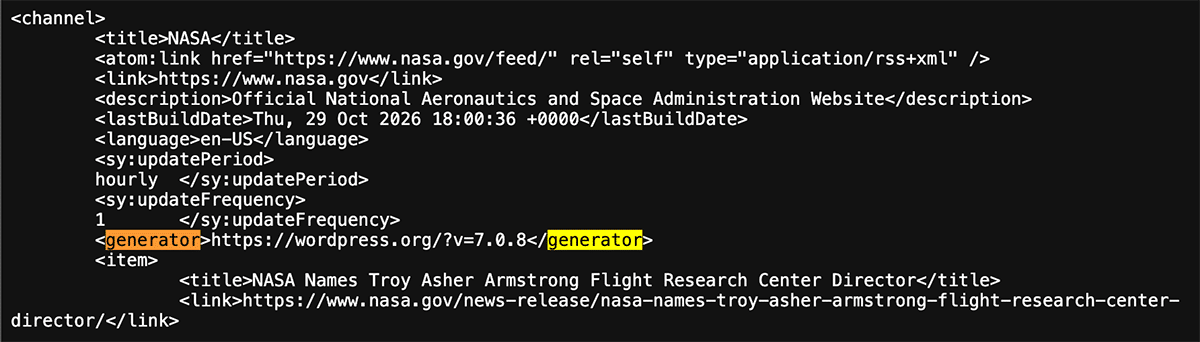
Another (sometimes) reliable method is to access the RSS feed. Just append /feed to the end of the site’s URL, launch page search, and type in “generator”. If this information is included in the RSS source, you should see something like this:
3. Method: Access the version.php File
The most reliable and accurate way to check your WordPress version is to look inside version.php, found among your site’s core files in the wp-includes directory.
Kinsta customers can access this PHP file in the MyKinsta dashboard by navigating to Sites > sitename > Files. This will show the contents of the WordPress environment’s root directory with wp-includes near the top of the list:
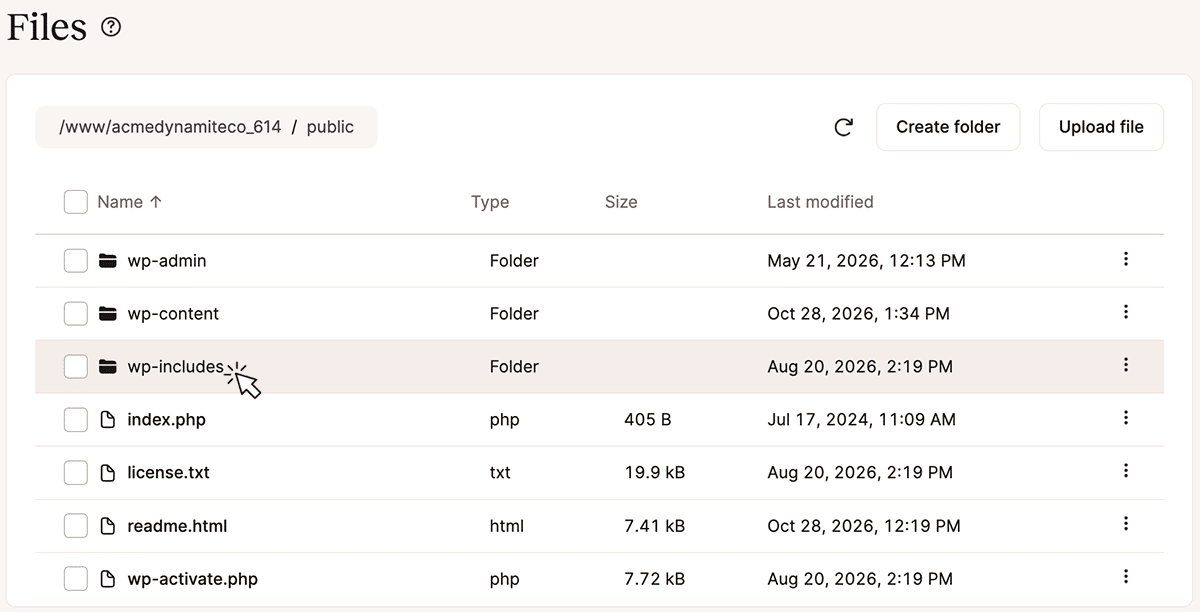
Click on wp-includes to view its contents. The contents of this directory make for a long list and you’re looking for a file that begins with the letter “V.” You can get there faster by clicking Name near the top of the page to activate a reverse sort that will put version.php higher up the list under the directory entries:
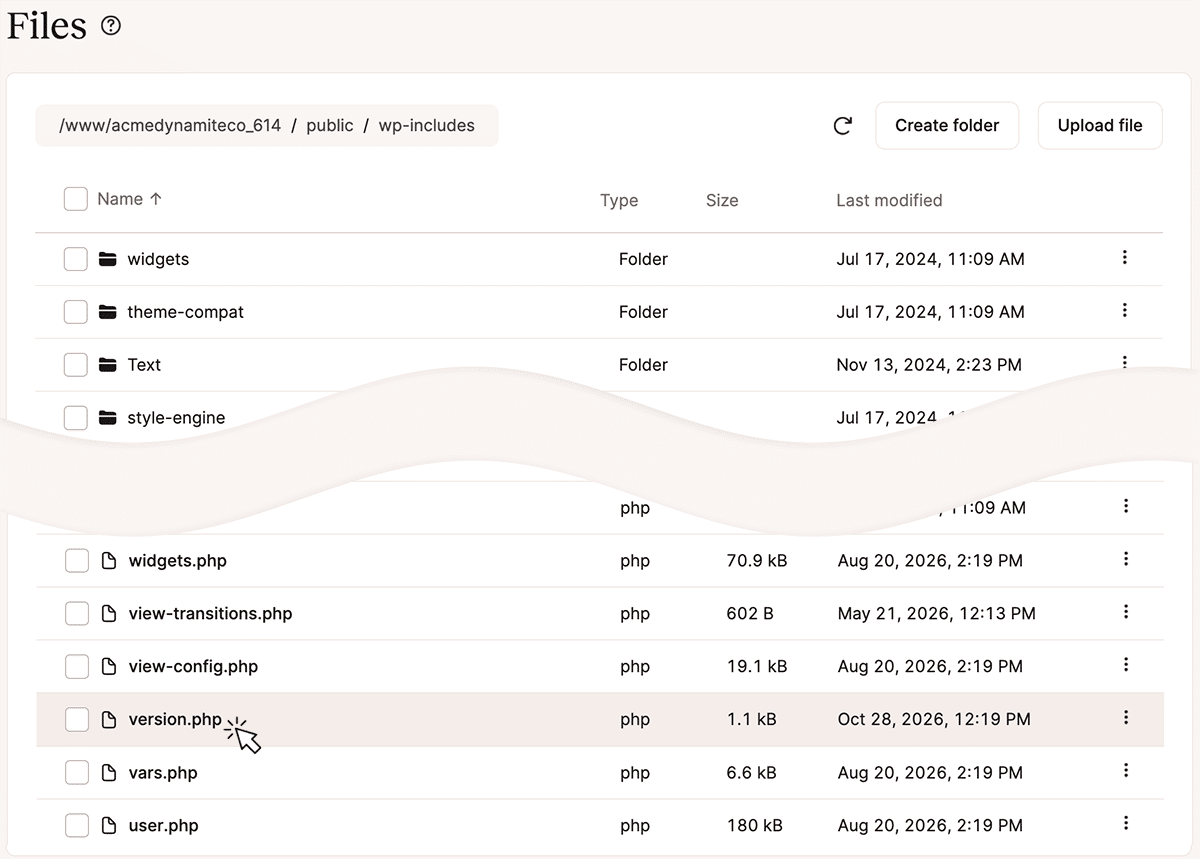
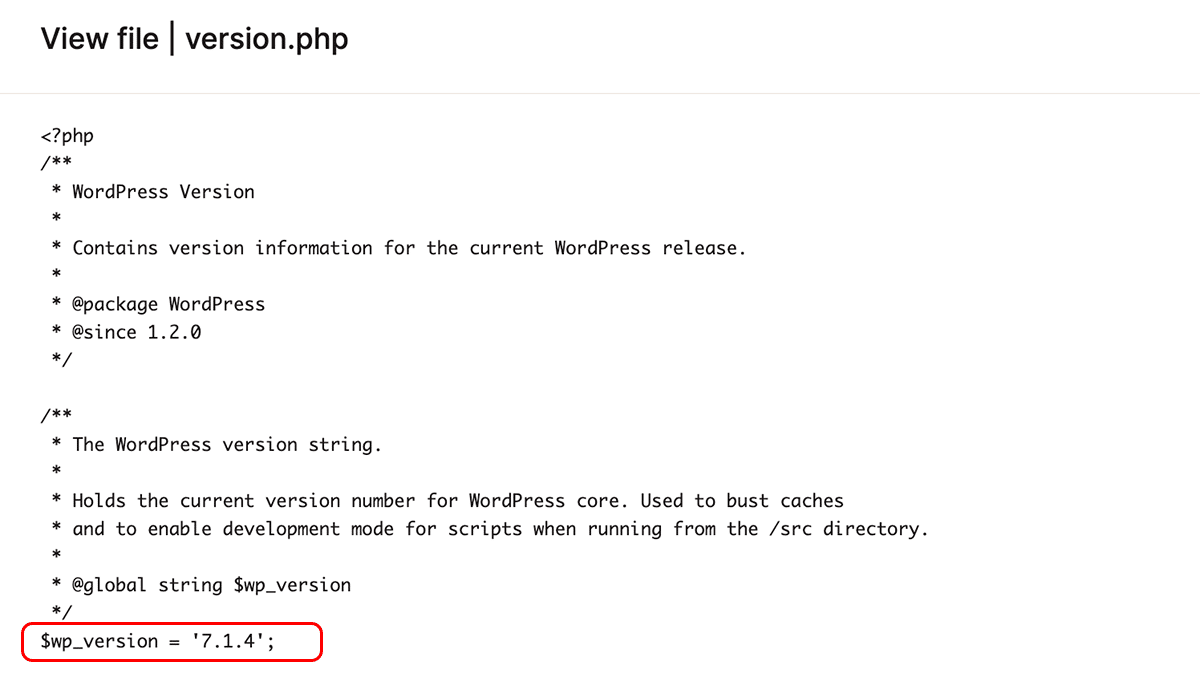
Click on version.php to view its contents. You’ll see the version number for this WordPress installation in the assignment of the global variable $wp_version. (This is the variable that is used to display the WordPress version in all the on-site examples we covered above.)
Alternate Methods To Access version.php
If you are not a Kinsta customer, your hosting provider may offer a site-administration dashboard like cPanel with a file manager enabled. If that’s the case, launch that tool and follow the steps above to locate and open version.php.
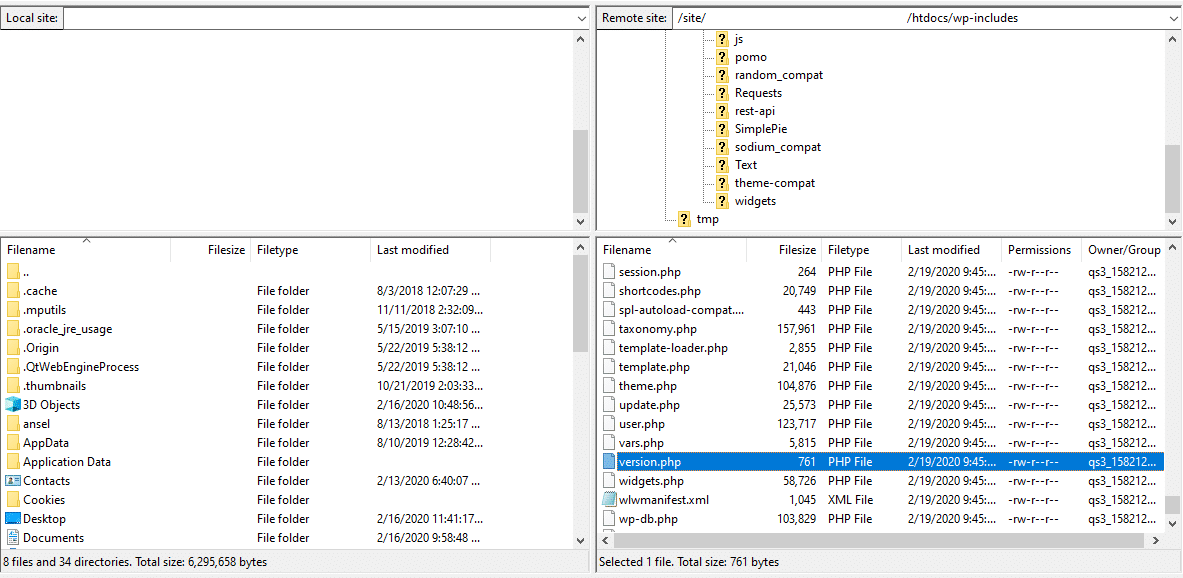
Alternatively, if your hosting provider permits FTP/SFTP access to your WordPress environment, you could download FTP/SFTP client software and connect to your server using the login particulars provided by your host.
Using the popular FTP/SFTP client FileZilla, your view of the wp-includes directory and version.php would look something like this:
Be careful not to delete or edit any files here!.
4. Method: Using WP-CLI
The WordPress command-line interface is a developer tool that gives you the ability to remotely execute commands on your WordPress site, similar to the command prompt software on your computer. You can access WP-CLI without even using a web browser.
Installing WP-CLI can be a little difficult, especially since there’s only limited support for Windows machines. Luckily, some web hosts — including Kinsta — include it on the server by default.
The first step is to connect to your web host through SSH, or Secure Shell, a protocol that allows you to remotely and securely execute commands on your website. Here’s an in-depth guide on how to get started with SSH.
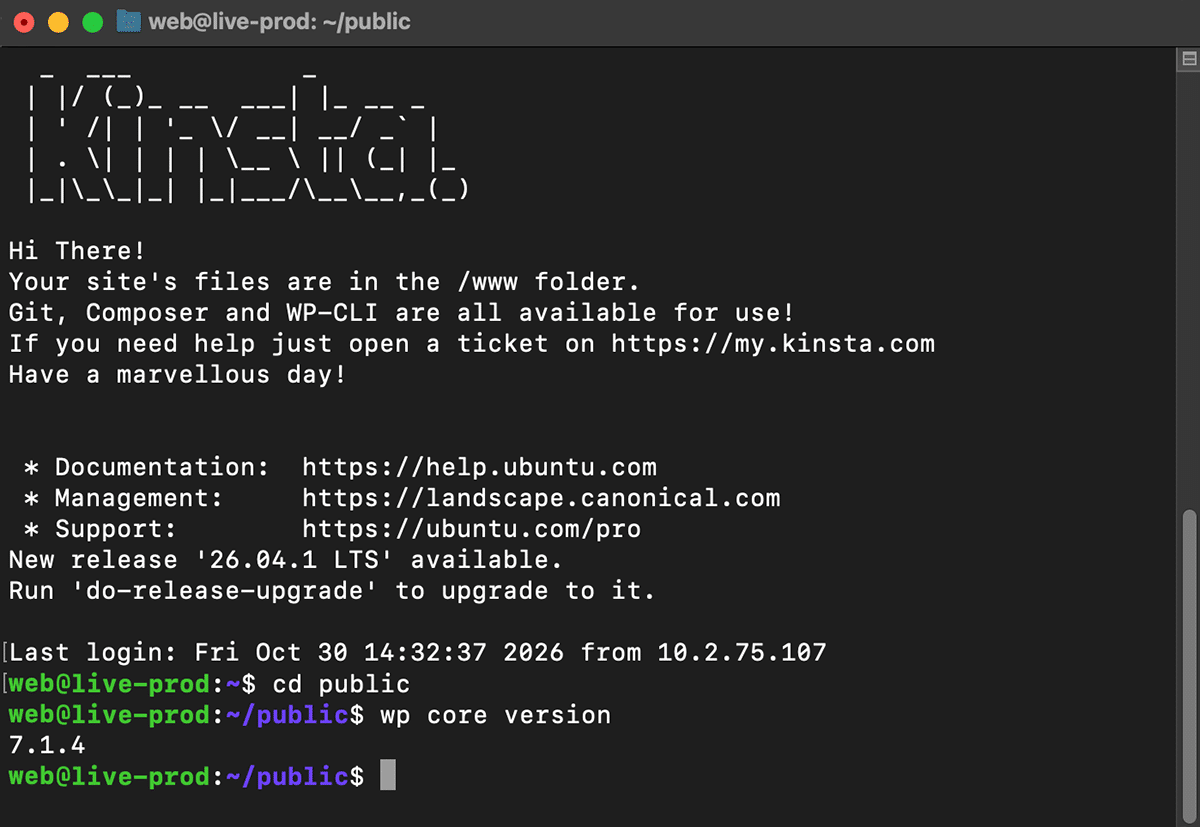
Once you’ve connected to your host through SSH, you will likely need too change directory to reach your WordPress environment’s root directory. (Here at Kinsta, that’s public).
To have WP-CLI display the installed site’s version number, enter the command wp core version:
This method is not recommended for new users, especially if you have other options. But if for some reason you can’t connect to your site through FTP, log in to the admin, or view the site’s frontend files, it’s the next best option for finding your WordPress version number.
How to Remove Version Info From Your WordPress Site
Seeing how easy it is to access this key information might have you a bit worried. Checking what WordPress version you’re using is one of the first things a hacker will do before they attempt to infiltrate your site — most exploits only work on outdated versions of WordPress, so they’ll go looking for easy targets who they know their methods will work on.
It’s impossible to entirely mask your version from anyone determined enough, as there are downloadable tools out there that have more advanced methods of detection. But you can deter the hackers who are looking for easy pickings by hiding this information from them.
While this is a small security risk at best — especially if you always keep your site up to date — it’s still not a risk worth taking. It’s a good idea to keep this information locked down as well as you can.
If you want an easy solution you can implement in just a few minutes, try the Meta Generator and Version Info Remover plugin.
Several plugins, including Yoast, Slider Revolution, and WPML, expose your WordPress version in the source code. This plugin counteracts that and keeps your info safe.
As a reminder: hiding your WordPress version, which is usually called “security through obscurity”, is just a small deterrent for hackers. To make a site secure there are several things to take care of, one of which is picking a secure host with active and passive measures.
Summary
Whether you’re checking to see if your site is long overdue for an upgrade, troubleshooting a WordPress issue, or are just curious what WordPress version another website is running, there are several methods available to find such information.
If you want to find the version of your own WordPress site, the best and most reliable way is to log into your admin and check one of the pages we listed. If you have FTP access or a host that supports WP-CLI, you can locate the version that way
Alternatively, whether you own the site or not, it may be faster to check the source code or RSS feed.