Having spent years in the WordPress hosting industry, I wonder: if people understood the economics of web hosting companies and how they really operate, would their expectations change?
Or would they still go after the dirt-cheap WordPress hosting providers?
There are a lot of myths and misconceptions around web hosting and it is really hard to find out the truth.
Most of the cheap WordPress hosting companies rarely or never share any behind-the-scenes information with their customers about how their system works or what’s truly included in the $5 monthly package.
But if you take the time and read the policy and all the fine print, you will know that there is no such thing as unlimited bandwidth or disk space, simply because it’s not possible.
Today I’ll cover what happens to your site’s speed, security, and search rankings when you hand it to a host that can’t afford to care about it. I’ll also dive into how web hosting companies operate and how they actually make their money.
The real costs of cheap hosting
First of all, let’s make something clear: the problem of cheap hosting isn’t the price, is what that price actually buys you, and more importantly, what it doesn’t.
1. Shared resources mean unpredictable speed
At $5 or $10 a month, your site shares a server with hundreds of other sites, sometimes thousands. That’s not a worst-case scenario, it’s the business model.
Shared hosting only works financially at that price point if the host packs as many accounts onto each machine as possible.
What that means in practice: your site’s performance depends on what your neighbors are doing. A traffic spike on someone else’s store, a runaway plugin on another account, a bot hammering a site two rows over, all of that affects your load times.
You have no isolation, and you have no recourse.
Page speed stopped being just a best practice in 2021, when Google began using Core Web Vitals as part of its page experience ranking signals.
Slow TTFB, poor LCP scores, and unstable layouts aren’t just technical details. They can affect search visibility and often have a measurable impact on user experience and conversion rates.
2. The renewal trap
Most budget hosts lead with an introductory rate that runs 60 to 80% below what they actually charge.
A plan marketed at $2.99 a month renews at $10, $12, sometimes $15. By the time you notice, you’ve built a site, configured email, set up plugins, and migrating feels like more work than it’s worth.
That’s the calculation they’re counting on. Check the terms before you sign up. The renewal rate is usually buried three screens deep.
It’s not a discount, it’s a trial price with an auto-renewal they’re hoping you’ll miss.
3. Support that isn’t there when you need it
Most hosting companies work with surprisingly thin margins.
After paying for servers, infrastructure, marketing, and other operating costs, there’s only a fraction of each dollar left to pay the people who actually support customers.
Typical hosting costs
For a typical hosting company:
- Cost of goods sold (servers & infrastructure): ~30%
- Marketing: ~10%
That means only 60 cents of every dollar is left to cover salaries and everything else.
Marketing alone is expensive. And the cost to acquire a customer in hosting is actually one of the highest out there.
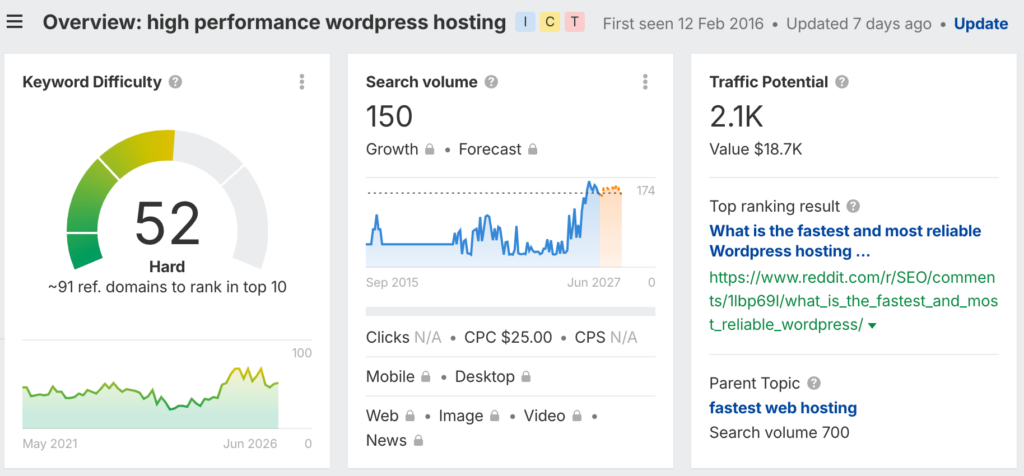
If you go down the pay-per-click (PPC) route, bidding on a keyword like “high performance wordpress hosting” can cost up to $20 per click with Google Ads.
This can vary based on your impression share, how much you’re willing to bid for top placement, and how long you want your ads to run.
SEO is cheaper in the long run, but it takes years to build authority and requires a significant investment in quality content.
A well-written technical article that is at least 2,500 words can easily cost $1,500.
Trying to outsource for cheap content to places like iWriter simply won’t work. You’ll need to spend time finding and hiring freelance writers who are experts at their craft. This can take months, sometimes years.
What that means in practice
Let’s say you’re paying $10 per month ($120/year) for WordPress hosting.
A skilled system administrator might cost a hosting company $100,000 per year including benefits. At first glance, it looks like they would only need about 833 customers to cover that salary, since 833 x $120 = ~ $100K.
But that’s before accounting for hosting costs and marketing. Since only 60% of revenue remains after those expenses, the math becomes:
$100,000 = X * 120 * 0.6
$100,000 = 72X
X = 1,389
In other words, it takes nearly 1,400 customers paying $10/month just to fund one experienced system administrator.
And that’s before paying for everything else a real hosting business needs, including:
- Founders and management
- Customer support staff
- Premium network infrastructure
- Monitoring and logging tools
- CDN and email services
- Help desk software
- Office and operating expenses
One system administrator simply can’t provide excellent support for 1,400 customers.
Even at $20/month, the ratio is still roughly 700 customers per administrator. At $50/month, it’s around 278 customers. Until you reach much higher price points, the economics simply don’t allow for a generous support-to-customer ratio.
4. SEO problems that are harder to trace
Speed and uptime are the obvious issues, but cheap hosting creates SEO problems that are much harder to diagnose.
- Server response time: TTFB (Time to First Byte) measures how quickly your server responds before the browser downloads anything. Overloaded shared servers often produce slow and inconsistent TTFB, making performance unpredictable. That delay also hurts LCP (Largest Contentful Paint), one of Google’s Core Web Vitals. Poor LCP scores create a worse user experience and can negatively affect search rankings.
- Downtime during crawls: Googlebot doesn’t announce when it’s visiting. If your site is down or timing out during a crawl, it records the failure. One outage isn’t a problem, but repeated failures can reduce crawl frequency and slow indexing.
- Shared IP reputation: Shared hosting places hundreds of websites on the same IP address. If some of those sites are involved in spam or malware, your site can inherit a weaker reputation. This rarely causes a direct penalty, but it can contribute to harder-to-explain issues like lower rankings or poorer email deliverability. The only real fix is moving to a better host.
5. Security risks you’re not seeing
Cheap shared hosting environments frequently don’t isolate accounts properly. A vulnerability in one site on the server can become a path into yours.
WordPress is a target precisely because it powers so much of the web, and attackers know that budget shared hosts are inconsistent about patching server software, enforcing access controls, and monitoring for lateral movement between accounts.
Basic SSL and a marketing claim about “malware scanning” are not security.
SSL encrypts the connection between your visitor and the server. It doesn’t protect your database, your admin credentials, your plugin files, or your backup schedule.
Getting hacked is expensive in ways that aren’t obvious upfront. Cleanup typically runs $200 to $500 minimum for a professional service if you don’t know what you’re doing, and that’s before you account for:
- The hours of downtime.
- The SEO damage from having your site flagged by Google’s Safe Browsing.
- And the trust you lose with anyone who landed on a compromised page.
One cleanup job costs more than a year of decent hosting.
Kinsta runs every site in its own isolated Linux container. No shared file system, no shared processes, no exposure to what’s happening on someone else’s account. Daily automatic backups with point-in-time restore. Hardware firewalls, DDoS protection through Cloudflare, and active uptime monitoring.
These aren’t add-ons. They’re included.
Why and How Cheap WordPress Hosting Exists
If the economics aren’t in the customer’s favor when charging $10 per month, why do so many hosting companies do it? The answer is twofold.
One is that they try to make a lot of money on upselling and hidden fees.
On things like website migrations, SSL certificates, domain registrations, WHOIS privacy, ad revenue from parked domains, dedicated IP addresses, fake SEO help, website badges, etc.
But those don’t always happen, as the people using these services are typically trying to save money and that’s why they’ve chosen them to begin with.
The second is what we call in the hosting industry “churn and burn.”
It’s a model where you know you’re charging too little using a bait-and-switch strategy. As a result, you know your customer service is going to suffer, you know customers are going to be upset, and you know you’re going to lose X customers each quarter.
Your business is simply designed around replacing those X customers with new ones.
You offer unlimited everything (except CPU or something hosts call “workers“), and then you throttle those clients/sites that use a lot of bandwidth.
You eventually end up suspending them due to resource usage and the performance of these successful sites tanks.
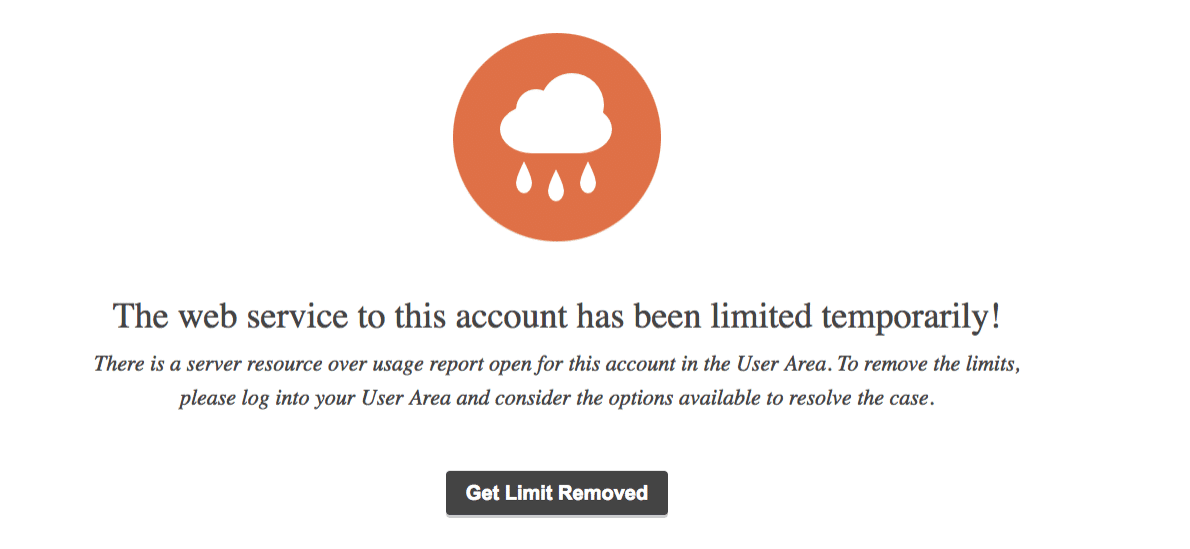
The client then leaves unhappy, and the host is happy because they can replace them with a site that gets little to no traffic.
It’s business models like this that give the hosting industry a bad reputation.
When Cheap Hosting Actually Makes Sense
A staging environment you spin up to test something. A portfolio site that gets twenty visitors a month, all of whom are people you told about it. A blog you’re running as a hobby with no intention of monetizing.
In those cases, $3 a month is the right call. Nobody should talk you out of it.
The calculation changes the moment a site needs to perform: make sales, rank for competitive keywords, keep uptime during traffic spikes, or represent a business to a customer who’s never heard of it before.
At that point the math in this post applies, and the invoice stops being the most important number.
Stop Thinking in Terms of Paying the Absolute Minimum
So when you’re thinking about shopping for hosting, stop thinking in terms of paying the absolute minimum, and start thinking about what you’re really buying.
Support and access to people with extensive knowledge about how WordPress works and more importantly, how to troubleshoot it.
You’re buying into a team that will be there to help you along your journey.
Kinsta was founded for this very reason and it’s why we’ve been able to grow so fast.
There are individuals, who we call “host hoppers” that have been bouncing around hosting providers for years, trying to find one that breaks out of the horrible “church and burn” or “upselling” business practices.
Our clients see the massive value that we provide and are willing to pay for it. They can then focus on growing their business, instead of worrying about downtime, 500 errors, or banging their heads against a wall trying to determine which WordPress plugin is causing performance issues.
Went from HostGator (garbage) to Siteground (not bad) to Kinsta (amazing). My site is the fastest it’s ever been, and the customer support during the migration was the best I’ve ever experienced.

Summary
Not everyone can afford to spend hundreds of dollars per month on hosting. But if you choose the cheapest option, set your expectations accordingly.
After all, if you’re spending more on coffee each month than you are on hosting, you’re probably paying the difference somewhere else.
Cheap hosting isn’t really cheap. It’s a deferred cost, paid later through slow load times, lost rankings, security issues, and the hours you’ll spend fixing problems that a better host would’ve prevented.
Managed WordPress hosting flips that equation. Kinsta isolates every site on its own container, backs it up daily, and puts a real security and performance team behind it instead of a shared support queue.
If you’re ready to avoid the hidden costs of cheap providers, check out our hosting plans!

Tom is the Chief Business Officer at Kinsta. He is responsible for accounting, forecasting, and internal audits. He has a sharp analytical mind and a zeal for data. You can always count on him to come up with strategic ideas for the team and smart ways to spread our brand and services worldwide. He is a big fan of extreme sports and cars. Connect with Tom on Twitter.